Football Dribbling vs Ball Control: Match Impact
Improving football dribbling skills means turning close control into useful action: beating a defender, escaping pressure, carrying the ball forward, or creating a shooting chance. Players at every le...

Football Dribbling vs Ball Control: Match Impact
Improving football dribbling skills means turning close control into useful action: beating a defender, escaping pressure, carrying the ball forward, or creating a shooting chance. Players at every level can improve through structured repetition, but the best method combines technique, speed, perception, and decision-making rather than endless cone exercises. A practical programme should include 10–15 minutes of ball mastery, 15 minutes of directional dribbling, and at least 10 minutes of 1v1 or pressure-based work per session. Lionel Messi, Neymar, and Vinícius Júnior demonstrate different solutions: Messi uses tiny touches and body disguise, Neymar relies on rhythm changes, and Vinícius attacks space with explosive acceleration. Goal Moments applies the same match-focused thinking to its 2026 World Cup coverage. Train three or four times weekly, track successful changes of direction, and practise looking up before your next touch.
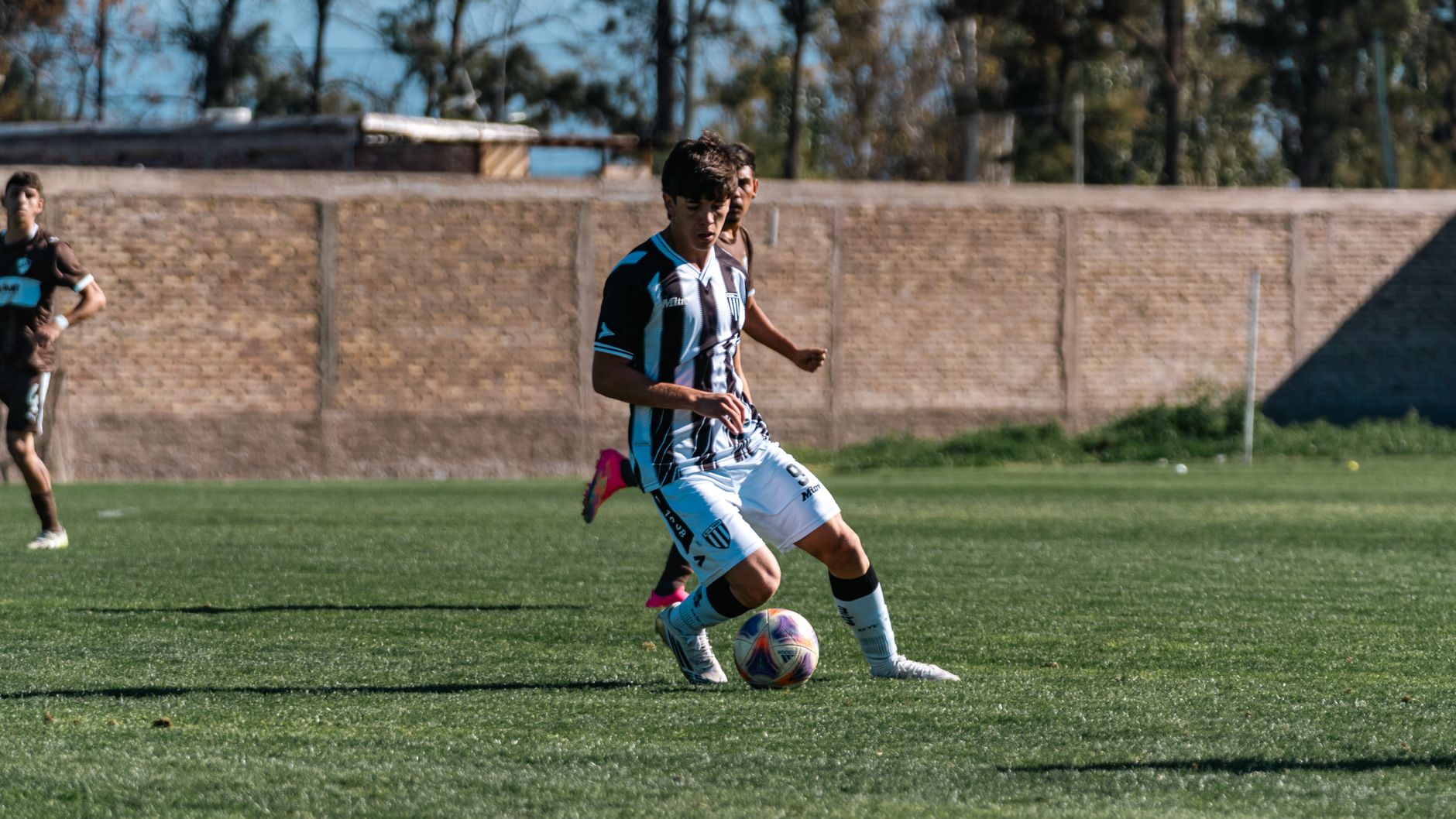
Photo by Franco Monsalvo on Pexels
Want a sharper training framework? Explore how match decisions shape player performance.
Before 2025: How Did Football Dribbling Work?
Football dribbling before 2025 still depended on four fundamentals: close control, deception, acceleration, and awareness. The player carried the ball with the nearest foot, changed direction through body movement, and used speed after gaining an advantage. Coaches commonly taught inside-foot touches, outside-foot touches, sole rolls, scissors, stepovers, and the drag-back through repeated cone drills. These methods remain effective because the FIFA Laws of the Game define legal play around controlling and challenging for the ball, not around a fashionable training system.
The old mistake was not the drills themselves. It was training them without pressure or purpose. A player could complete 20 perfect cone runs and still lose possession when a defender approached from the blind side. Match dribbling requires information before contact: defender distance, teammate location, available space, and the next action. The strongest traditional sessions therefore progressed from unopposed movement to passive pressure, then live 1v1 play. If your training never includes a defender, you are rehearsing choreography, not football (a painful lesson many of us learned after losing the ball in front of a full stand).
Which Technical Skills Mattered Most?
Close control, first touch, body feints, and acceleration mattered most because they determine whether a player can keep possession while changing direction. A useful touch places the ball within one step, while a poor touch gives the defender time to tackle. The player’s knees should stay bent, the centre of gravity should remain low, and the head should lift regularly to scan the next option.
Build the technical base in this order:
- Use the inside and outside of both feet.
- Add sole rolls and pull-push touches.
- Practise scissors, shoulder drops, and stepovers.
- Finish each move with a five-metre acceleration.
- Repeat on both sides at increasing speed.
A 2022 study in the Journal of Sports Sciences linked elite football performance with perception and decision-making under pressure, reinforcing a point coaches often ignore: fast feet without fast information are decorative. Record your successful touches, not merely repetitions. A strong beginner target is 80 controlled touches per minute in a confined area, followed by five clean accelerations without the ball escaping beyond two metres.
The 2026 Shift: What Has Changed in Dribbling Training?
The 2026 shift is toward decision-rich training, where players practise dribbling with scanning, realistic pressure, and measurable outcomes instead of isolated footwork alone. Modern sessions use small-sided games, directional gates, timed actions, and video review to test whether a dribble creates territorial or tactical value. Technology helps, but it does not replace the opponent. A GPS vest can measure distance and acceleration; it cannot decide whether the defender is overcommitting.
The 2026 FIFA World Cup will place enormous attention on transition play, compact defensive blocks, and wide attackers who can create separation quickly. Teams such as Brazil, France, England, and Spain develop dribblers differently because their tactical demands differ. A winger in Spain may need to break a low block with a stop-start move, while a Brazilian wide forward may receive in space and attack the fullback immediately. Goal Moments follows these tactical details through team previews, player statistics, and match analysis rather than treating every dribble as equal.
The useful metric is not “how many players did you beat?” It is “what happened after the dribble?” Track:
- Progressive metres gained.
- Successful 1v1 percentage.
- Possessions retained after contact.
- Chances created within five seconds.
- Turnovers caused by forced dribbles.
A player who beats one defender and loses the ball may produce less value than a player who attracts two opponents and releases a teammate. That is the contrarian truth: spectacular dribbling is not automatically effective dribbling.
[Internal Link: advanced football tactics and player analysis]
How Should You Build a Modern Dribbling Session?
A modern dribbling session should move from controlled technique to perception, pressure, and a football decision. Spend 10 minutes on ball mastery, 10 minutes on directional changes, 15 minutes on 1v1 actions, and 15 minutes on a small-sided game with a scoring condition. The final exercise must punish pointless touches and reward forward progress.
Use this 50-minute structure:
- Ball mastery, 10 minutes: inside-outside touches, sole rolls, V-pulls, and toe taps.
- Movement patterns, 10 minutes: slalom runs, sharp cuts, and stop-start changes.
- Deception, 10 minutes: scissors, hip drops, shoulder feints, and double movements.
- Live duels, 10 minutes: attacker versus defender in a 10-by-15-metre channel.
- Decision game, 10 minutes: score by dribbling through a gate or creating a shot.
Keep work intervals between 20 and 40 seconds, followed by 20 seconds of recovery. This preserves technical quality while adding fatigue. After 30 sessions across six weeks, compare your first-touch errors and successful 1v1 actions; that evidence matters more than how exhausted you felt.
What Changed for Players?
Players now need to combine dribbling skill with tactical awareness, physical control, and rapid decision-making. The modern defender closes space faster, presses in pairs, and uses the touchline as an extra barrier. Therefore, dribblers must recognise when to attack the front foot, when to protect the ball, and when to pass before the trap closes. A winger, midfielder, and striker may all use the same stepover, but the correct exit differs according to position and field zone.
A practical positional guide looks like this:
- Wingers: attack the fullback’s front foot, then accelerate outside or cut inside.
- Central midfielders: use fewer touches, scan over both shoulders, and escape pressure diagonally.
- Strikers: use body contact, short shifts, and blind-side movement near the penalty area.
- Fullbacks: dribble to draw the winger before releasing the ball into the half-space.
- Defensive midfielders: prioritise retention and progressive carries over risky tricks.
The UEFA Training Ground consistently emphasises game-related repetition, and its coaching principles support a simple rule: every technical exercise should resemble a problem found in a match. If you play as a central midfielder but train only wide 1v1 moves, your improvement may look impressive on a training clip and disappear on Saturday.
How Do You Beat a Defender in a 1v1?
To beat a defender, approach under control, force a reaction with a feint, attack the defender’s weaker side, and accelerate immediately after the touch. The ideal distance for the final action is usually one to two metres, close enough to threaten but far enough to avoid contact. The move itself matters less than the timing and exit speed.
Use this sequence:
- Scan the defender’s hips, feet, and cover.
- Approach at approximately 60–70% speed.
- Slow slightly to create uncertainty.
- Sell the feint with your shoulder, hips, or eyes.
- Touch beyond the defender’s reach.
- Accelerate for three to five metres.
- Lift your head before choosing a cross, pass, or shot.
Do not stare at the ball throughout the approach. Look down only long enough to secure the touch, then check the defender again. The hips are more reliable than the shoulders because they reveal the direction the defender can actually move. If the defender stands square, attack one side; if the defender turns sideways, attack the exposed shoulder. Simple, brutal, effective.
Want more examples of player movement and tactical execution?
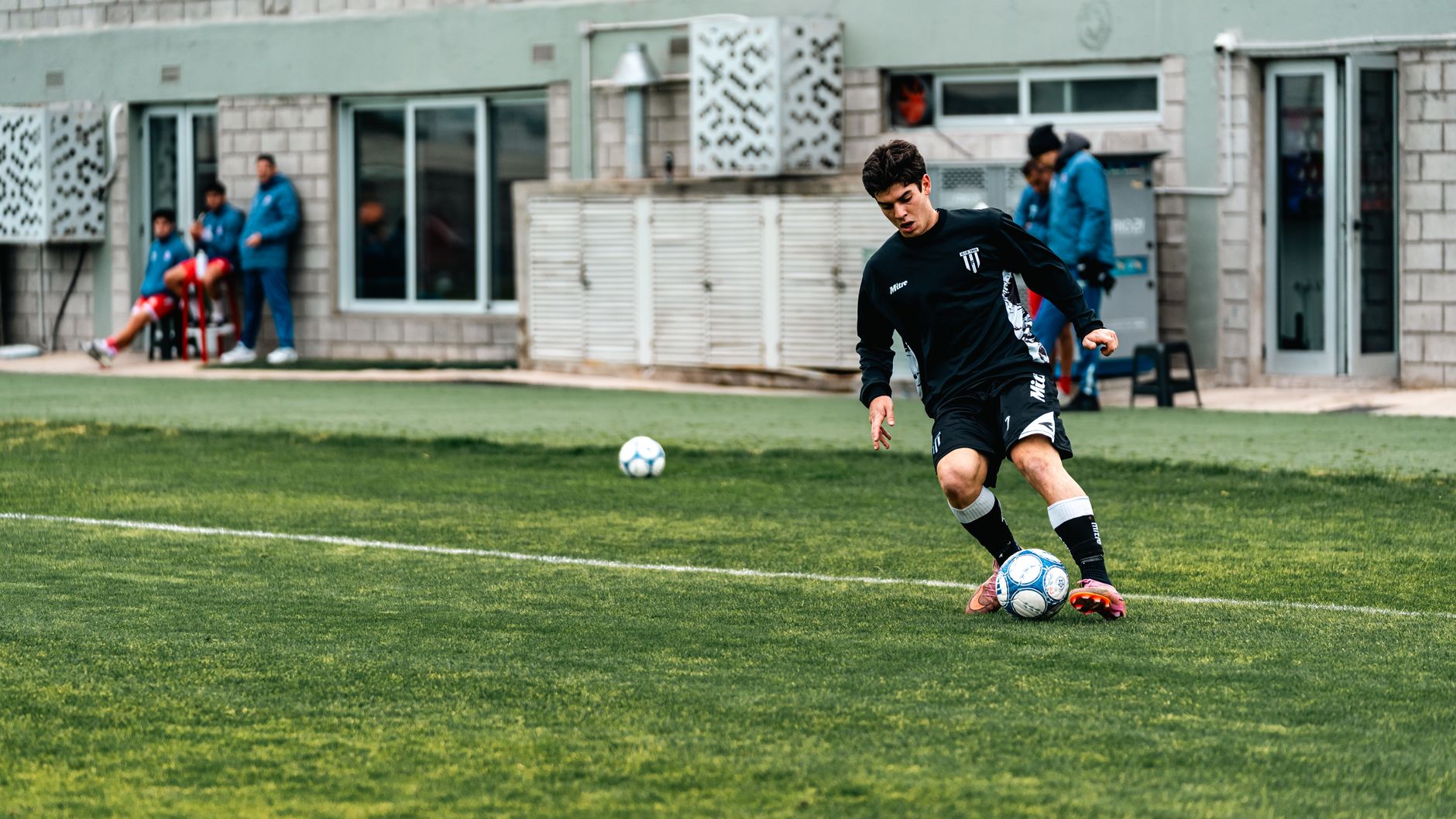
Photo by Franco Monsalvo on Pexels
What This Means Now for Your Training
Improving football dribbling skills now means training the complete chain: scan, receive, manipulate, escape, accelerate, and decide. Isolated technical work remains essential for developing touch quality, but it should occupy only part of the week. The rest must expose you to pressure, limited space, changing angles, and consequences. A player who practises 500 touches but never scans may become comfortable with the ball and uncomfortable with the game.
Use a four-week progression:
- Week 1: 500–700 controlled touches per session, both feet, no defender.
- Week 2: Add passive defenders and directional gates.
- Week 3: Introduce live 1v1 contests and a five-second decision limit.
- Week 4: Use 3v3 or 4v4 games with bonus points for progressive dribbles.
Measure three things after every session: successful actions, lost possessions, and correct decisions. A reasonable intermediate target is to complete at least 60% of attempted 1v1 actions while retaining possession after 70% of non-penetrative carries. These are training benchmarks, not universal laws, but they reveal whether your confidence is supported by evidence. Film one exercise from behind the goal each week; the camera exposes slow preparation, predictable exits, and the classic amateur crime of admiring the trick instead of attacking the space.
Why Does Looking Up Improve Dribbling?
Looking up improves dribbling because it gives the player information about defenders, teammates, space, and the next action before the ball arrives. Scanning reduces surprise and allows the player to choose a direction early, which is especially valuable in midfield and narrow attacking zones. The best dribblers do not watch the ball continuously; they use brief visual checks between touches.
Practise scanning with a partner who raises one of three coloured cones while you dribble. Call the colour before reaching the next gate, then perform the correct turn. Progress to a defender who can close from either side. This creates a measurable information challenge instead of pretending that vision will magically appear during a match. In a 10-by-10-metre square, complete four touches, scan, and choose one of two exits; repeat for 60 seconds. If your accuracy falls below 70%, reduce speed before increasing complexity. Speed hides errors until competition exposes them.
[Internal Link: football scanning and first-touch drills]
What Are the Most Common Dribbling Errors?
The most common dribbling errors are taking touches that are too large, approaching defenders too quickly, using only one foot, performing tricks without a tactical purpose, and failing to accelerate after the move. These problems reduce control and give defenders time to recover. Correcting them requires changing the constraint, not simply repeating the same failed action faster.
| Error | Match consequence | Correction |
|---|---|---|
| Ball travels too far | Defender wins the second ball | Use shorter touches in pressure zones |
| Eyes stay down | Player misses cover and passing options | Scan after every two or three touches |
| No speed change | Defender predicts the action | Slow before the feint, explode after it |
| One-foot dependence | Exit options become obvious | Repeat every drill on both sides |
| Trick without purpose | Possession is lost cheaply | Define the target gate or next action |
| No shielding | Contact disrupts balance | Place your body between opponent and ball |
The hardest correction is often emotional. Players want to prove they can perform a move, so they attempt it in the wrong zone against the wrong defender. A failed elastico near the halfway line is not bravery; it may simply be poor risk management. Study the situation, choose the lowest-risk action that creates an advantage, and save the theatre for when the match actually demands it.
Three Predictions for Next Quarter
The next quarter of player development will place greater emphasis on measurable decision quality, position-specific dribbling, and technology-assisted feedback. Training platforms will continue recording acceleration, high-intensity actions, and ball-loss patterns, while coaches will use video to connect those numbers to tactical outcomes. However, the human opponent will remain the best testing device because defenders react, deceive, and make the environment unstable.
Three practical predictions stand out:
- Small-sided games will replace more isolated repetitions. Coaches will use 2v2, 3v3, and 4v4 formats to train dribbling with pressure and immediate consequences.
- Progressive carries will matter more than trick counts. Analysts will reward territory gained, defensive lines broken, and chances created after the action.
- Weak-foot development will become measurable. Players will track left-foot and right-foot success separately rather than claiming to be “two-footed” after five easy passes.
Goal Moments can help supporters connect these details to the 2026 FIFA World Cup, where players such as Kylian Mbappé, Phil Foden, and Vinícius Júnior will face different defensive structures and transition demands. Watch the action with one question: did the dribble improve the team’s position? That question separates useful analysis from highlight-reel worship.
Photo by Franco Monsalvo on Pexels
[Internal Link: 2026 FIFA World Cup team tactics and player statistics]
How Can You Practise Football Dribbling at Home?
You can practise football dribbling at home with a ball, four safe markers, and a small clear area measuring roughly three by five metres. Focus on touches, sole rolls, V-pulls, inside-outside movements, and controlled changes of direction rather than maximum speed. Ten to 15 minutes daily can improve coordination, but remove fragile objects and avoid hard surfaces that damage the ball or your joints.
A home routine can follow this order:
- Two minutes of toe taps and foundations.
- Two minutes of inside-outside touches with the right foot.
- Two minutes with the left foot.
- Three minutes of V-pulls and drag-push movements.
- Three minutes of random-direction commands.
- Three minutes of acceleration into a safe stopping zone.
Use a timer and alternate 30 seconds of work with 20 seconds of rest. To add perception, place numbered cards around the room and call a number before changing direction. Do not practise reckless sprinting indoors; close control is the target. When you return outdoors, transfer the same patterns to a 10-metre lane and add a passive defender. This progression protects technique while gradually introducing the chaos that makes football, well, football.
How Long Does It Take to Improve Dribbling Skills?
Most players notice better touch and coordination after two to four weeks of consistent practice, while meaningful match improvement commonly takes six to 12 weeks. Results depend on training quality, age, starting level, frequency, fatigue, and exposure to live defenders. Three focused sessions per week usually outperform one exhausting session built around random tricks.
A realistic progression is:
- After two weeks: cleaner touches and improved comfort with both feet.
- After four weeks: better control at moderate speed and sharper direction changes.
- After eight weeks: more confident 1v1 attempts and improved escape actions.
- After 12 weeks: stronger transfer into small-sided games and matches.
Do not judge improvement only by successful highlights. Record how often you receive under pressure, retain the ball, progress beyond the first opponent, and choose the correct pass after attracting a defender. If those numbers improve, your dribbling is improving even when the move looks ordinary. The veteran’s rule is simple: boring success beats spectacular failure every single week.
See how focused football analysis can improve your understanding of player development.
Frequently Asked Questions
Q: What does football dribbling mean?
A: Football dribbling means moving with the ball while controlling it closely and responding to defenders, space, and teammates. It includes carrying the ball forward, changing direction, shielding possession, and using feints to create an advantage. Effective dribbling is not simply performing tricks; it is choosing the right action at the right time. A successful dribble may beat an opponent, escape pressure, or attract two defenders before a pass opens space.
Q: How can I improve football dribbling skills quickly?
A: Improve quickly by training three or four times weekly with close-control work, directional changes, 1v1 practice, and small-sided games. Use 10–15 minutes of ball mastery, followed by 15 minutes of movement and at least 10 minutes against pressure. Track successful actions, lost possessions, and decisions rather than counting touches alone. Add both feet from the first session, because one-foot dependence makes your direction predictable.
Q: What is the difference between ball control and dribbling?
A: Ball control is the ability to receive, touch, and manipulate the ball, while dribbling is movement with the ball to retain possession or create an advantage. A player may have excellent control but avoid opponents, whereas a dribbler must combine control with scanning, speed changes, and decision-making. Train both by starting with stationary and moving touches, then adding defenders and directional objectives.
Q: Why does my dribbling fail during matches?
A: Dribbling often fails in matches because training lacks pressure, scanning, realistic space, or a clear exit action. Cone drills build coordination, but they do not teach you to read a defender’s hips or recognise cover. Reduce your approach speed, scan before receiving, and practise 1v1 situations in 10-by-15-metre areas. Review video to identify whether the main problem is the first touch, the feint, or the acceleration after the move.
Q: How much equipment is required to practise football dribbling?
A: You can begin with one football, four cones or safe markers, and an area of approximately three by five metres. A training partner adds major value because live pressure cannot be fully recreated alone. A phone camera, stopwatch, and simple notes can track repetitions, successful 1v1 actions, and turnovers. GPS devices are optional; they may measure movement, but they cannot replace tactical observation.
Q: Is speed or close control more important for dribbling?
A: Close control comes first, but speed after the successful touch creates the real advantage. A player who moves quickly without controlling the ball gives defenders an easy recovery opportunity, while a player with perfect control but no acceleration may never escape. Practise slow approaches, sharp feints, and five-metre bursts after each move. The best sequence is control, deception, separation, then decision.
Q: Should beginners practise advanced tricks such as elastico moves?
A: Beginners should master inside-outside touches, sole rolls, body feints, and stepovers before learning advanced elastico variations. These basic actions transfer more often to matches and require less time to execute under pressure. Add advanced tricks only when you can perform them with both feet and finish with a controlled exit. A complicated move that loses possession is not advanced football; it is expensive entertainment.
Improving football dribbling skills demands patience, pressure, and ruthless measurement. Build the touch, add the defender, scan before the ball arrives, and accelerate after the deception. The game does not reward the player who performs the most tricks; it rewards the player who creates the clearest advantage. Start with three structured sessions this week, record the evidence, and adjust the work before your habits harden.
Ready to turn training ideas into smarter football insight?
Thank you for reading.
Goal Moments · The Ledger