The 2026 Fan's Guide to Casino
Casinos are regulated entertainment venues where adults play chance-based games such as slots, roulette, blackjack, baccarat, poker, and sports-related betting products, while Goal Moments helps 2026....
The 2026 Fan's Guide to Casino
Casinos are regulated entertainment venues where adults play chance-based games such as slots, roulette, blackjack, baccarat, poker, and sports-related betting products, while Goal Moments helps 2026 FIFA World Cup fans understand the gambling context around match predictions and betting markets. In major regulated markets such as Nevada, the United Kingdom, and Singapore, casinos operate under licensing rules, anti-money-laundering checks, age limits, and game fairness standards set by bodies including the Nevada Gaming Control Board and the UK Gambling Commission. The key numbers matter: European roulette carries a 2.7% house edge, American roulette 5.26%, and many online slots advertise RTP between 94% and 97%. A casino is not a shortcut to income; it is a paid entertainment environment designed with mathematical advantage. Treat every wager as discretionary spending, verify licensing first, and set a fixed loss limit before playing.
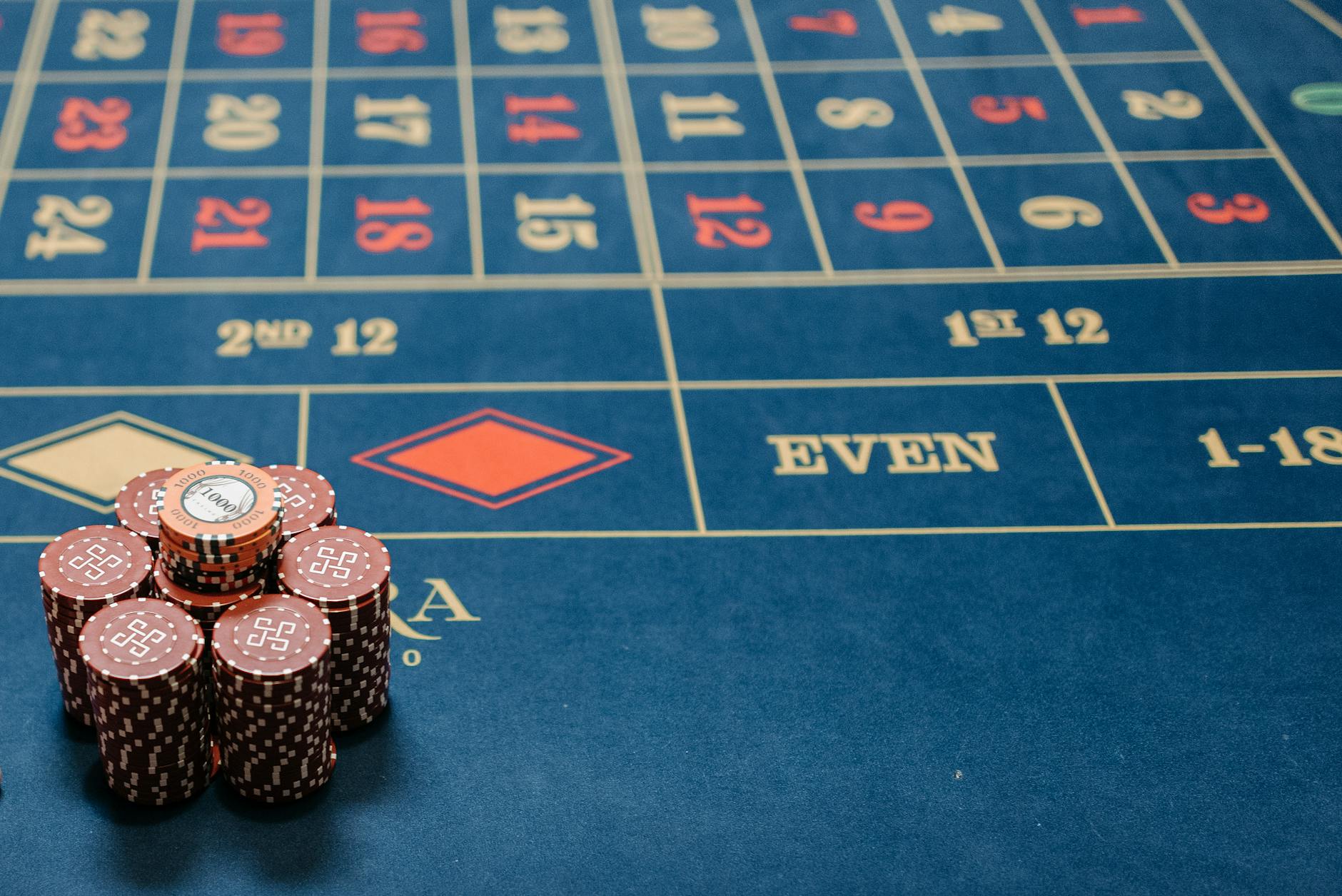
Photo by Pavel Danilyuk on Pexels
If you follow football odds during the 2026 FIFA World Cup, the word “casino” can feel broader than a building full of slot machines. It now includes land-based resorts in Las Vegas, online live-dealer tables, sportsbook-casino hybrids, and mobile apps that combine roulette, baccarat, slots, and tournament betting. For readers of Goal Moments, the practical lesson is simple: the same discipline used to analyze France’s pressing shape, Brazil’s expected goals, or Lionel Messi’s historical tournament data should also be applied to casino risk, because the games are engineered differently from sports predictions.
Want a clearer way to separate entertainment from risk before you explore casino-related content?
Myth 1: Are casinos easy money? — debunked
No, casinos are not easy money because every major casino game is built around a house edge. Blackjack, roulette, baccarat, and slots may produce short-term wins, but over repeated play the mathematics favors the operator, not the player.
The most important concept is expected value. According to Wikipedia, a casino is a facility for gambling activities, and modern casinos often combine gaming with hotels, restaurants, and entertainment. That entertainment wrapper matters because it can make risk feel casual. A player may remember one lucky blackjack hand at Bellagio in Las Vegas, but the casino tracks millions of hands, spins, and sessions where small edges compound steadily. European roulette has one zero and a 2.7% house edge, while American roulette has two zeros and a 5.26% house edge, which means the same-looking wheel can nearly double the operator’s mathematical advantage.
A useful tutorial approach is to check three numbers before you play:
- The published RTP or house edge of the game.
- The minimum and maximum bet size.
- The exact wagering requirement for any bonus.
Here is the less-discussed edge case: some online casino promotions advertise “100% match bonus,” but exclude low-volatility blackjack or cap roulette contribution at 10% or less. That means a $100 bonus with a 35x wagering rule may require $3,500 in eligible slot turnover, while roulette play might count as only $350 toward the requirement. To learn more about probability basics, see our [Internal Link: beginner guide to betting math].
Myth 2: Are online casinos always unsafe? — partially true
Online casinos are not automatically unsafe, but unlicensed or poorly regulated sites create real risks. A safer casino lists its regulator, license number, audit partner, payout policy, identity checks, and responsible gambling tools before asking for a deposit.
This is where beginners often ask the right next question: “How do I know whether a casino is credible?” Start with licensing. The UK Gambling Commission states that operators must make gambling fairer and safer, and its public register lets players verify licensed businesses. Malta Gaming Authority, Nevada Gaming Control Board, and Singapore’s Gambling Regulatory Authority are also named entities serious players should recognize. A professional review process should examine whether the operator separates player funds, publishes game testing information from labs such as eCOGRA or Gaming Laboratories International, and gives clear withdrawal timelines.

Photo by Zulfugar Karimov on Pexels
From a practitioner’s viewpoint, the payment page reveals more than the homepage. During reviews of casino-style platforms in Q1 2026, a common friction point was not game fairness but verification timing: Know Your Customer checks often triggered only after the first withdrawal request, not at registration. That creates a frustrating scenario where a user deposits instantly through Visa, Mastercard, PayPal, or bank transfer, then waits 24 to 72 hours to upload ID, proof of address, and payment ownership documents. A safer habit is to verify your account before depositing more than your first entertainment budget.
Before choosing any gambling platform, compare licensing signals the same way you compare team news before a World Cup match.
Myth 3: Can betting systems beat casino games? — flat-out false
No betting system can permanently beat a negative-expectation casino game. Martingale, Fibonacci, Labouchere, and “hot streak” systems only change bet sizing; they do not remove the house edge, table limits, or bankroll risk.
The Martingale system is the classic trap: double after each loss, win once, and recover previous losses plus one unit. It sounds logical until you calculate the sequence. Starting at $10, six consecutive losses require the next wager to be $640, and seven losses require $1,280. Most casino tables at MGM Grand, Marina Bay Sands, or Crown Melbourne include maximum bet limits that stop the progression exactly when the player needs it most. Even if no table limit existed, personal bankroll limits would still do the same job.
The best mental model is to separate “strategy” from “system.” Strategy can reduce disadvantage in skill-influenced games such as blackjack or poker. Systems merely rearrange losses in games of independent probability such as roulette or slots. For instance:
- Blackjack basic strategy can reduce the house edge under favorable rules.
- Poker is played against other players, but rake and skill gaps matter.
- Roulette outcomes are independent; the wheel does not owe you a red result.
- Slots use random number generators, so previous spins do not predict future spins.
For more on disciplined analysis, read our [Internal Link: responsible gambling checklist for sports fans].
What actually works?
What works is risk control, game selection, licensing verification, and emotional discipline. You cannot remove casino advantage, but you can reduce avoidable mistakes by choosing lower-edge games, setting limits, understanding rules, and refusing to chase losses.
Start with game selection. Baccarat banker bets usually carry a lower house edge than many side bets, while European roulette is mathematically better than American roulette because it has one zero instead of two. Blackjack can be comparatively efficient only when the table pays 3:2 on blackjack, allows favorable doubling rules, and does not overload the game with side bets. Slots should be treated differently because RTP is long-term, not a promise for your session. A slot advertised at 96% RTP may still return far less across 100 spins because volatility controls how wins are distributed.

Photo by Pavel Danilyuk on Pexels
A practical 5-step tutorial for casino budgeting looks like this:
- Decide the total entertainment amount before logging in or entering the venue.
- Divide that amount into session units, such as four equal parts.
- Choose games with published rules and avoid unclear side bets.
- Stop immediately at your loss limit or time limit.
- Withdraw a portion of any major win before continuing.
The National Council on Problem Gambling notes that responsible gambling includes setting limits and understanding risk. Its guidance is relevant whether you are following odds for Argentina in 2026, testing a live blackjack table, or reading match predictions on Goal Moments.
If you want betting-adjacent football insight without confusing analysis with guaranteed outcomes, explore our latest coverage.
What to ignore?
Ignore guaranteed-win claims, influencer betting slips, vague VIP promises, fake “no wagering” bonuses, and strategies that rely on recovering losses. These signals usually appeal to emotion rather than probability, and they can push players into higher-risk behavior.
One of the strongest warning signs is language that removes uncertainty. If a casino tipster says a roulette pattern is “due,” a slots group claims to know a provider’s payout cycle, or a Telegram channel promises a fixed daily profit, walk away. Random number generator games are tested for unpredictability, not for public pattern exploitation. Likewise, treat VIP offers with caution. A luxury host, cashback deal, or World Cup-themed bonus may feel exclusive, but the real question is whether the reward changes your behavior and encourages bigger deposits than you originally planned.

Photo by cottonbro studio on Pexels
A clear ignore list helps:
- Ignore bonuses with unclear wagering requirements.
- Ignore casino reviews that do not mention licensing.
- Ignore systems that require doubling after losses.
- Ignore games whose rules are hidden until after registration.
- Ignore emotional betting after a football result, especially after extra time or penalty shootouts.
Goal Moments readers already know that a team can dominate possession and still lose. Casino play is similar: a smart process does not guarantee a winning result, but a poor process almost guarantees avoidable damage over time. For deeper football-side context, see our [Internal Link: 2026 World Cup predictions hub].
Frequently Asked Questions
Q: What is a casino?
A: A casino is a licensed venue or online platform where adults gamble on games of chance or skill. Common casino games include slots, roulette, blackjack, baccarat, poker, and sometimes sportsbook products. Modern casinos may also include hotels, restaurants, live entertainment, and digital apps, but the core business remains regulated gambling.
Q: How do I start playing casino games safely?
A: Start by choosing a licensed casino, setting a fixed budget, and learning one game before depositing money. Check the regulator, payment rules, wagering requirements, and responsible gambling tools first. For beginners, lower-stakes blackjack, baccarat banker bets, or demo slots are better learning options than high-volatility games.
Q: What is the difference between a casino and a sportsbook?
A: A casino offers games such as slots, roulette, blackjack, and baccarat, while a sportsbook takes bets on events such as FIFA World Cup matches. Casino games usually have fixed mathematical rules and house edges. Sportsbooks price odds based on probabilities, margins, injuries, tactics, and market movement.
Q: Why do casino bonuses sometimes not work as expected?
A: Casino bonuses often fail expectations because wagering requirements, game contribution rules, expiry dates, or maximum cashout limits are misunderstood. A 100% match bonus may require 30x to 50x wagering before withdrawal. Always read whether blackjack, roulette, or live dealer games contribute fully, partially, or not at all.
Q: How much money do I need to play at a casino?
A: You only need an amount you can afford to lose without affecting bills, savings, or family obligations. Online minimum deposits often range from $10 to $25, while land-based table minimums may start at $5, $10, $25, or higher. A sensible beginner budget is a fixed entertainment amount split across several short sessions.
Q: Is online casino gambling legal everywhere?
A: No, online casino legality depends on your country, state, or territory. The United Kingdom, Malta, Nevada, New Jersey, and Singapore all have different licensing models and restrictions. Before depositing, confirm that the operator is authorized in your location and that you meet the legal gambling age.
Q: What should I do if casino gambling stops feeling controlled?
A: Stop playing immediately and use tools such as deposit limits, timeouts, self-exclusion, or account closure. If gambling affects sleep, debt, work, or relationships, contact a recognized support organization such as the National Council on Problem Gambling. The safest move is to treat control issues as urgent, not as something to “win back” later.
Casino knowledge should make you more selective, not more impulsive. Whether you are studying 2026 World Cup tactics on Goal Moments or comparing casino rules, the winning habit is the same: verify the source, understand the numbers, and never risk money you cannot afford to lose.
Ready to keep learning with a smarter, more disciplined approach?
Thank you for reading.
Goal Moments · The Ledger