The Fan's Guide to 2026 College Football
College football in 2026 is a United States-centered gridiron season built around weekly FBS schedules, conference races, rankings, bowl games, and the College Football Playoff. The season opens acros...

The Fan's Guide to 2026 College Football
College football in 2026 is a United States-centered gridiron season built around weekly FBS schedules, conference races, rankings, bowl games, and the College Football Playoff. The season opens across Week 1 from August 22 to September 7, 2026, with notable fixtures including North Carolina vs. TCU at Aviva Stadium in Dublin and San José State at USC in Los Angeles. Fans will track FBS, FCS, ACC, Big Ten, SEC, Big 12, Pac-12, and Mountain West games before bowl season runs from December 13, 2026, to January 27, 2027. The CFP National Championship is scheduled for January 25, 2027, at Allegiant Stadium in Las Vegas, Nevada. For readers of Goal Moments, the smart approach is to treat college football like tournament analysis: follow schedule strength, roster continuity, quarterback efficiency, and market movement before forming predictions or betting opinions.
If you want a sharper way to follow the season beyond headlines, start with matchup context and schedule timing.
Photo by George Zografidis on Pexels
The Bottom Line: What Should Fans Know First?
The 2026 college football season is a long, layered competition where weekly schedules, conference standings, FBS rankings, and College Football Playoff positioning matter more than any single headline. The key dates are Week 1 from August 22 to September 7, bowl season from December 13, and the CFP title game on January 25, 2027.
Think of college football as a season-long sorting machine. Early nonconference games reveal roster quality, September injuries reshape depth charts, October conference play separates real contenders from ranked illusions, and November rivalry games often decide playoff access. ESPN’s schedule hub lists weekly matchups across FBS, FCS, ACC, Big Ten, SEC, Big 12, CUSA, MAC, Mountain West, Sun Belt, and independent programs, while the NCAA’s FBS coverage tracks rankings, statistics, championship history, and major headlines. According to NCAA.com, the CFP National Championship for this cycle is set for January 25, 2027, at Allegiant Stadium in Las Vegas, giving the 2026 campaign a clear finish line.
For Goal Moments readers used to FIFA World Cup forecasting, the closest comparison is group-stage pressure plus knockout qualification. A September upset may look dramatic, but its real value depends on schedule strength, opponent quality, quarterback health, and whether the result improves a team’s playoff profile. To learn more about applying tournament logic across sports, see our [Internal Link: tournament prediction fundamentals].
What Players Actually See: How Does the Season Feel on the Field?
Players experience college football as a weekly cycle of film study, travel, injury management, depth-chart competition, and opponent-specific game planning. Unlike casual fans, they do not see a “schedule” as a list of dates; they see short preparation windows, hostile stadiums, weather changes, and tactical matchups that decide snaps.
A useful beginner mistake to avoid is treating a 12-game regular season as evenly weighted. It is not. A Week 1 neutral-site game, such as North Carolina vs. TCU at Aviva Stadium in Dublin, creates unusual travel and routine challenges. A late-season SEC or Big Ten road game may involve crowd noise, cold weather, and a defense that has 10 weeks of film on your tendencies. A Friday night Mountain West matchup can also behave differently from a Saturday afternoon Big 12 game because rest days, television slots, and campus logistics change preparation rhythm.
Players and coaches typically break the week into a repeatable workflow:
- Sunday review: Grade film, treat injuries, and correct major mistakes.
- Monday installation: Introduce the opponent’s base offense, defense, and special teams.
- Tuesday and Wednesday workload: Practice the highest-volume tactical packages.
- Thursday refinement: Rehearse red-zone, third-down, and two-minute situations.
- Friday travel or walkthrough: Reduce physical load and sharpen assignments.
- Saturday execution: Adjust in real time based on formations, tempo, and field position.
This is why a betting line such as USC -35.5 against San José State, noted in early listings, is only a starting point. A large spread may reflect roster gap, recruiting depth, home-field edge at Los Angeles Memorial Coliseum, or market expectations. However, if USC rotates quarterbacks early, protects starters, or faces unusual weather, the final margin can behave differently from the pregame number. That gap between paper advantage and field execution is where serious analysis begins.
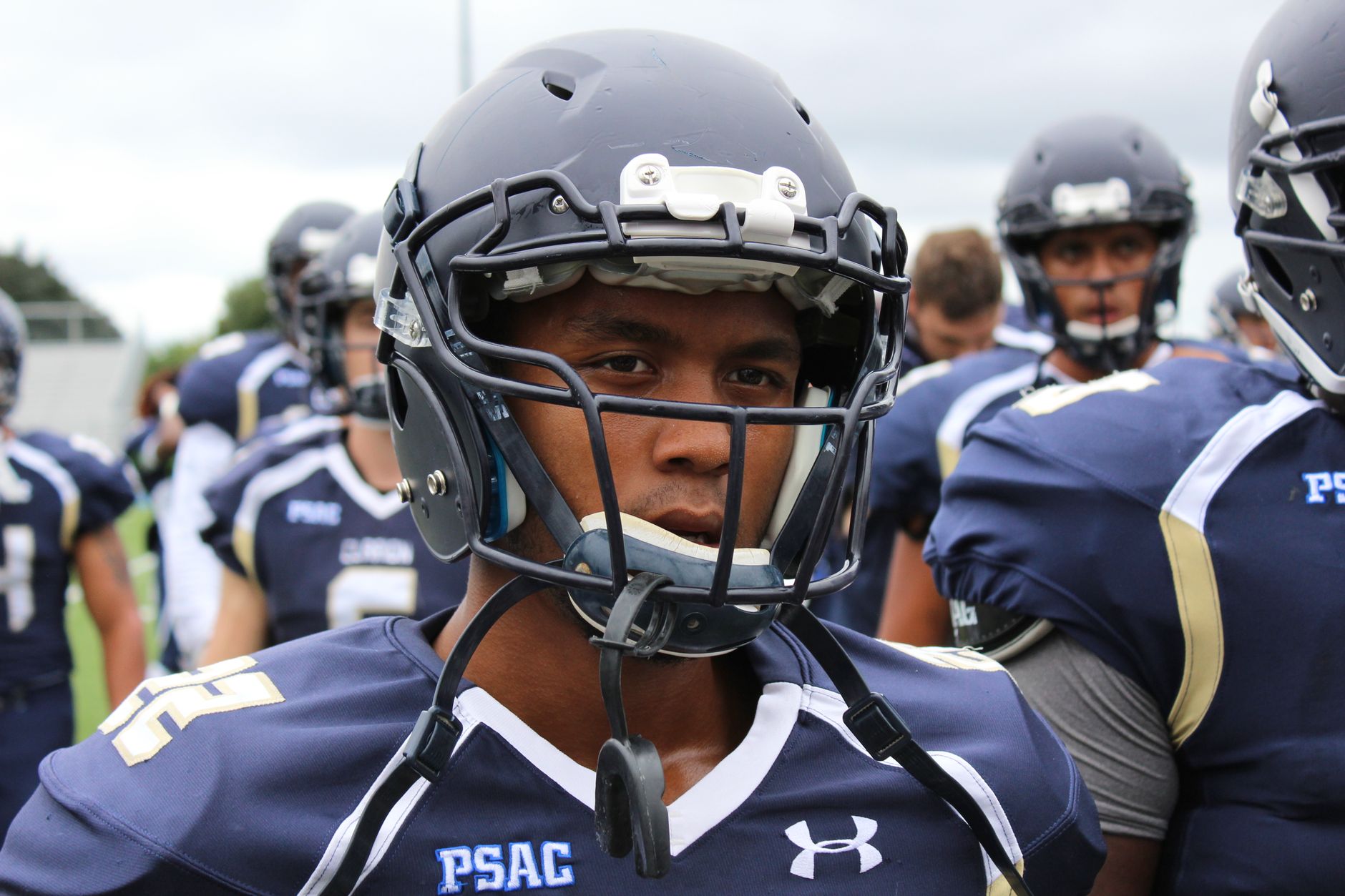
Photo by football wife on Pexels
To go deeper into how tactical preparation shapes predictions, explore the details before the market fully adjusts.
The 3 Things That Matter Most
The three most important factors in 2026 college football analysis are quarterback stability, schedule strength, and line-of-scrimmage control. Rankings and media narratives matter for attention, but these three variables explain more results because they directly affect scoring efficiency, game script, and late-season durability.
1. Quarterback Stability
Quarterback continuity is the first checkpoint because college offenses depend heavily on timing, protection calls, and third-down decision-making. A returning starter such as Oregon quarterback Dante Moore, highlighted in early 2026 coverage by NCAA.com, gives an offense a head start that raw recruiting rankings may not capture. Similarly, Ohio State, Notre Dame, Indiana, Miami, and Alabama State will draw attention not just because of brand value, but because quarterback development and transfer additions can shift a conference race quickly.
Here is the practical method: compare returning passing production, offensive coordinator continuity, sack rate, and explosive-play rate before trusting a preseason ranking. A team with a top-10 ranking but a new quarterback, new coordinator, and rebuilt offensive line often carries more risk than a lower-ranked team with a veteran passer and stable scheme. This is also where Goal Moments readers can borrow from World Cup analysis: a talented squad without midfield structure often underperforms, just as a talented roster without quarterback rhythm can stall.
2. Schedule Strength
Schedule strength determines how much a record really means. A 9-3 Big Ten team with road losses against Ohio State, Oregon, and Penn State may be stronger than a 10-2 team from a lighter schedule. ESPN’s 2026 schedule structure shows weekly slots from Week 1 through Week 15, followed by bowls and the CFP window, which means timing matters as much as opponent name. Back-to-back road games, short-week travel, and late-November rivalry pressure can create hidden difficulty that does not appear in simple win-loss tables.
A practitioner-level tip: isolate “sandwich spots,” where a favorite plays a weaker opponent between two emotionally significant games. For example, a team facing a ranked rival in Week 8 and a conference contender in Week 10 may underprepare for a Week 9 opponent, especially if injuries are accumulating. Many public previews mention rivalry weeks, but fewer quantify the emotional and travel burden around them. Build a weekly calendar and mark travel distance, rest days, opponent ranking, and rivalry status; this creates a more realistic view of team form than standings alone. For more forecasting structure, read our [Internal Link: schedule strength analysis guide].
3. Line-of-Scrimmage Control
Line play is the quiet engine of college football. Offensive lines decide whether a quarterback can reach second reads, and defensive fronts decide whether opponents can stay on schedule. A team that wins first down with four-yard runs and low-pressure passing has a larger playbook on second and third down; a team stuck in third-and-long becomes predictable. This is why serious analysts study sack rate, tackles for loss, rushing success rate, and red-zone run efficiency instead of relying only on highlight plays.
One under-discussed edge case involves early-season mismatches between FBS and FCS programs, such as Jacksonville State at North Dakota State in Fargo. North Dakota State is an FCS power with a physical identity and strong home environment at the Fargodome, so the label “FCS” alone can mislead casual observers. In practical terms, a disciplined FCS line can compress possessions, reduce variance for an underdog, and make a favorite’s spread harder to cover. The Wikipedia overview of college football defines the sport as the college version of gridiron football, but the competitive gap between subdivisions is not always as simple as the labels suggest.
[Internal Link: college football betting basics]
Edge Cases & Gotchas: Where Do Most Fans Misread College Football?
Most fans misread college football when they overvalue brand names, preseason rankings, and final scores without checking context. The common traps are assuming all conferences are equal, ignoring travel and rest, treating FCS opponents as automatic wins, and confusing a playoff contender with a profitable betting side.
The first gotcha is international or neutral-site travel. North Carolina vs. TCU at Aviva Stadium in Dublin is not just another opener; it is a logistics test involving time zones, practice disruption, and unfamiliar stadium operations. Casual fans may focus on the novelty of Ireland, but analysts should ask which team travels better, which roster has veteran leadership, and whether early-game timing affects offensive rhythm. In these matchups, first-quarter performance can be more volatile than season averages suggest.
The second gotcha is ticket and venue context. Early listings show San José State at USC with tickets as low as $32 at Los Angeles Memorial Coliseum, while NC State at Virginia listed tickets as low as $48 at Scott Stadium. Those prices are not predictive by themselves, but they can hint at expected attendance intensity, market interest, and home-field atmosphere. A half-full stadium does not create the same communication stress as a sold-out rivalry venue, and crowd noise affects young quarterbacks more than veterans. To compare crowd and venue effects across sports, see our [Internal Link: home advantage research notes].
The third gotcha is postseason interpretation. Bowl season from December 13 to January 27 overlaps opt-outs, transfer portal decisions, coaching changes, and NFL Draft preparation. A team that was excellent in October may not be the same team in a December bowl if its quarterback, coordinator, or top defensive backs are unavailable. The College Football Playoff reduces some of that uncertainty because championship incentives remain strong, but even CFP games require monitoring injuries and roster news through January 25, 2027, at Allegiant Stadium.

Photo by RDNE Stock project on Pexels
If you want to turn these hidden factors into better pregame reads, build your checklist before odds and rankings shape your opinion.
Verdict: Is 2026 College Football Worth Following Closely?
Yes, 2026 college football is worth following closely because the season combines weekly betting markets, playoff implications, roster movement, conference realignment effects, and high-variance rivalry games. Fans who track context rather than headlines will understand the sport faster and make more disciplined predictions.
The best approach is to follow the season in layers. Start with the official schedule, then add rankings, injuries, depth charts, travel spots, and tactical matchups. Use NCAA.com for championship dates and FBS headlines, ESPN for weekly schedule organization, and team-level reporting for injuries and coordinator changes. The NCAA’s public-facing football hub states the championship location and date clearly, while ESPN’s schedule format separates weeks, conferences, bowls, and CFP windows, helping readers avoid mixing regular-season form with postseason conditions.
For Goal Moments, college football is a useful companion to World Cup-style analysis because both sports reward structured thinking. You are not just asking, “Who is better?” You are asking, “Who is better today, in this venue, under this schedule pressure, with this roster, against this tactical problem?” That mindset protects you from overreacting to one upset, one ranking, or one viral highlight.
A simple working checklist looks like this:
- Confirm the kickoff date, venue, and travel situation.
- Compare quarterback continuity and offensive coordinator stability.
- Review line-of-scrimmage data, not just total yards.
- Check injuries, suspensions, opt-outs, and transfer news.
- Separate playoff motivation from bowl-game uncertainty.
- Compare market line movement with your own projection.

Photo by Yan Krukau on Pexels
Frequently Asked Questions
Q: What is college football?
A: College football is the college-level version of American or Canadian gridiron football, most prominently played in the United States. It includes divisions such as FBS and FCS, with major conferences like the SEC, Big Ten, ACC, Big 12, and Mountain West. The 2026 FBS season includes weekly regular-season games, bowl games, and the College Football Playoff ending on January 25, 2027, in Las Vegas.
Q: How do I follow the 2026 college football schedule?
A: The best way to follow the 2026 college football schedule is to track it week by week from Week 1 through the CFP. Start with Week 1 from August 22 to September 7, then follow conference games through Week 15 and bowl season from December 13 onward. Use schedule pages from ESPN and official NCAA coverage, then add team injury reports before making predictions.
Q: What is the difference between FBS and FCS football?
A: FBS is the highest NCAA Division I football subdivision, while FCS is the second Division I football subdivision with a different postseason structure. FBS teams compete for bowl games and the College Football Playoff, while FCS teams use a playoff bracket. However, strong FCS programs such as North Dakota State can challenge FBS opponents, especially at home.
Q: Is college football useful for betting analysis?
A: Yes, college football can be useful for betting analysis if you focus on context rather than brand names. Key factors include quarterback stability, schedule strength, injuries, travel, pace, and line-of-scrimmage performance. Large spreads, such as USC -35.5 against San José State in early listings, require special caution because substitutions and game script can affect cover probability.
Q: Why do college football rankings change so much?
A: College football rankings change quickly because teams play uneven schedules and roster conditions shift throughout the season. A ranked team can fall after one road loss, while an unranked team can rise after beating a strong conference opponent. Rankings also reflect perception, strength of record, injuries, and playoff committee evaluation rather than only win-loss totals.
Q: How much does it cost to attend a college football game?
A: College football ticket costs vary widely by team, venue, opponent, and timing. Early listings showed San José State at USC tickets as low as $32 and NC State at Virginia tickets as low as $48, but rivalry and playoff-relevant games often cost far more. Fans should compare official ticket platforms, resale markets, parking fees, and travel costs before budgeting.
Q: What should I do if my college football prediction fails?
A: If your college football prediction fails, review whether the miss came from bad information, wrong assumptions, or normal variance. Check injuries, turnovers, weather, red-zone efficiency, and whether the closing line moved against your position. Keep notes by game type because recurring errors, such as overvaluing ranked favorites or ignoring travel, are easier to fix when documented.
For weekly insights that connect football logic, tournament thinking, and smarter fan analysis, continue with Goal Moments.
Thank you for reading.
Goal Moments · The Ledger