Top 3 Champions League Draw Predictions vs Simulator: 2026 Edge
Paris Saint-Germain is the strongest overall Champions League draw prediction for 2026/27, with Bayern Munich second and Real Madrid third. The official league-phase draw took place in Monaco on 27 Au...

Top 3 Champions League Draw Predictions vs Simulator: 2026 Edge
Paris Saint-Germain is the strongest overall Champions League draw prediction for 2026/27, with Bayern Munich second and Real Madrid third. The official league-phase draw took place in Monaco on 27 August 2026, creating 36-team schedules of eight matches per club. Each team faces two opponents from every seeding pot, with one home and one away fixture in each pot. PSG’s sample schedule includes Barcelona, Manchester City, Roma, Aston Villa, Galatasaray, Villarreal, Slovan Bratislava and Como. That is a brutal test, but PSG’s recent European success and Luis Enrique’s tactical control keep them at the top. Bayern offers a more balanced power profile, while Real Madrid remains the knockout-stage nightmare nobody wants. These are probability-based football judgments, not guarantees or betting instructions. Start with opponent quality, travel, home advantage and squad depth before trusting any Champions League prediction.
A draw is not a verdict. It is a battlefield map. I have watched supposedly “easy” groups devour favourites, while unfashionable clubs turn hostile away trips into gold. The smart approach is simple: judge the entire eight-match route, not one glamorous fixture. Otherwise, you are just staring at club badges and calling it analysis (we have all done it).
Want a sharper tournament breakdown from Goal Moments?

Photo by Franco Monsalvo on Pexels
The Top 3 at a Glance
The three leading Champions League draw predictions are ranked by schedule difficulty, squad resilience, tactical flexibility and likely league-phase points. PSG ranks first because its ceiling remains exceptional despite a demanding opponent list, Bayern Munich ranks second for competitive balance across all four pots, and Real Madrid ranks third because its European pedigree is immense but its route can become punishing quickly. The distinction matters: the best predicted team is not always the team with the easiest draw. In fact, an easy-looking schedule can conceal awkward travel, defensive mismatches and dangerous Pot 3 opponents such as Napoli, RB Leipzig or Galatasaray. UEFA’s official Champions League competition information confirms the modern league-phase structure, while UEFA’s access list and regulations explain how club entry and competition administration work. My contrarian view is this: a club should not automatically chase the softest draw; facing elite opposition early can expose tactical weaknesses before the knockout rounds, which is far more valuable than collecting hollow wins against exhausted minnows.
- Paris Saint-Germain — best overall: Two-time defending champions with elite attacking variety and proven tournament control.
- Bayern Munich — best balanced route: Strong across the pitch, with fewer obvious structural weaknesses over eight matches.
- Real Madrid — best knockout threat: The deepest European pedigree, but potentially vulnerable if the schedule stacks elite away fixtures.
For additional context, compare these forecasts with our [Internal Link: Champions League match prediction guide], especially when form changes after the draw.
#1 Paris Saint-Germain: Best Overall
Paris Saint-Germain is the best overall Champions League draw prediction because its recent European record, tactical maturity and attacking depth outweigh a difficult league-phase schedule. The sample PSG route contains Barcelona, Manchester City, Roma, Aston Villa, Galatasaray, Villarreal, Slovan Bratislava and Como. That combination includes four heavyweight tests and two dangerous travel assignments, but PSG has enough possession quality and transition speed to remain a top-eight candidate.
The key is not simply PSG’s star power. It is the distribution of difficulty. Barcelona and Manchester City test PSG’s ability to defend long possession spells; Roma and Aston Villa challenge its midfield duels and defensive transitions; Galatasaray and Villarreal create hostile atmospheres and tactical friction. Slovan Bratislava and Como look more manageable on paper, yet those matches may become decisive if PSG drops points against Barcelona or Manchester City. Eight fixtures mean every mistake has a price, and the league table rewards aggregate consistency rather than theatrical one-off victories.
Luis Enrique’s side has won the Champions League in each of the previous two seasons according to the supplied reference coverage, giving PSG an unusual psychological advantage. However, defending a title creates a hidden cost: opponents prepare differently, and domestic fatigue accumulates. My practical edge case is worth remembering. If PSG rotates heavily in the first two matchdays, the expected points from its two Pot 4 fixtures may fall more sharply than casual forecasts assume, because unfamiliar defensive combinations often matter more against counterattacking teams than against possession-heavy giants.
Why PSG’s draw still deserves caution
PSG’s strongest prediction does not mean a guaranteed first-place finish. The club can legitimately lose in Paris against a superior opponent, concede control away to Galatasaray, or surrender points against Manchester City. A single injury to a central midfielder can alter the entire balance because the schedule includes opponents capable of attacking space behind an aggressive press. This is where many amateur predictions collapse: they count famous forwards and ignore rest cycles, defensive spacing and substitution quality.
Use a simple points model:
- Elite fixtures: estimate 1 to 4 points from Barcelona and Manchester City.
- Strong fixtures: target 6 to 10 points from Roma, Aston Villa, Galatasaray and Villarreal.
- Manageable fixtures: expect 6 points from Slovan Bratislava and Como.
- Likely range: approximately 13 to 20 points, depending on away results and rotation.
That range is deliberately wider than a bookmaker-style headline. Football is not a vending machine. PSG should challenge for the top eight, but its ranking depends heavily on whether the strongest opponents arrive before or after international breaks. Follow
Explore the latest team-by-team outlook before making your own shortlist.
#2 Bayern Munich: Best for a Balanced Prediction
Bayern Munich is the best balanced Champions League prediction because its squad profile should cope with varied opponents, different match tempos and the eight-game league phase. Unlike a team dependent on one tactical route, Bayern can dominate possession, attack crosses, press high or exploit transitional space. That flexibility reduces the danger of one awkward matchup ruining its campaign.
The Bayern forecast should focus on defensive control. Elite European matches are often decided after the first press is beaten, not during the first five minutes of noise. Bayern’s full-backs must judge when to advance, its midfield must protect the central channel, and its forwards must convert early chances before a disciplined opponent becomes comfortable. Against Pot 3 teams such as Napoli, RB Leipzig or Galatasaray, the margin may be smaller than the club name suggests. Those sides can punish loose rest defence, especially when Bayern commits numbers forward.
A balanced prediction is also more useful than a dramatic one. Bayern may not produce the flashiest headline, but a projected 15 to 19 points gives it a credible route into the top eight. The club’s best-case scenario involves winning home fixtures, avoiding careless away draws and using squad rotation intelligently. The danger scenario is familiar to anyone who has suffered through European football: two away defeats, one red card and suddenly the “comfortable” schedule looks like a burning house.
#3 Real Madrid: Best Value for Knockout Upside
Real Madrid is the best value-style Champions League prediction for knockout upside because its European experience, individual quality and late-match mentality remain unmatched by most clubs. Yet Real Madrid ranks third here because draw strength is not the same as trophy potential. A demanding schedule can force the club into the knockout play-offs or a lower league-phase position, creating an exhausting route before the last 16.
Carlo Ancelotti’s former Real Madrid teams repeatedly demonstrated how Champions League matches can bend under pressure. The club does not always need territorial dominance; it needs one decisive action, one counterattack or one moment of technical brilliance. That makes Real Madrid dangerous against Manchester City, Arsenal, Liverpool and Atlético Madrid, but it also complicates prediction models because chance conversion can swing sharply between fixtures.
The best forecast is therefore conditional. If Real Madrid secures home wins against lower-pot opposition and takes four points from two elite opponents, it should reach the top eight. If it treats away fixtures as routine, the league phase can become awkward. This is an important information gain that simple draw simulators miss: fixture timing changes tactical incentives. A club may accept a draw away before a domestic derby, while the same opponent becomes a must-beat target later in the schedule.
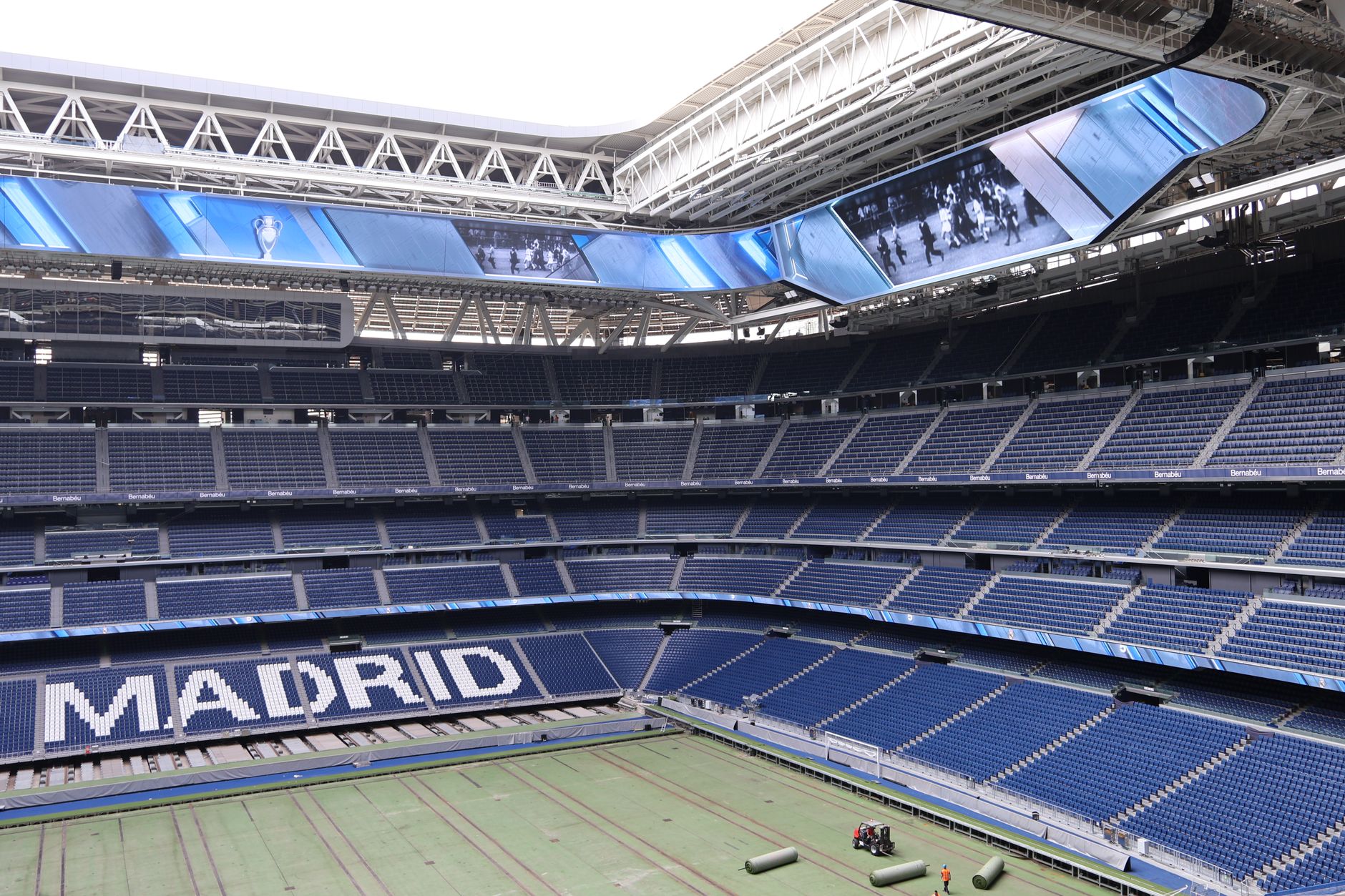
Photo by Travel Photographer on Pexels
How We Ranked Them
The ranking uses five weighted criteria: opponent strength, home-away balance, squad depth, tactical adaptability and travel or scheduling risk. This method avoids the lazy habit of calling every Pot 4 opponent harmless. Even Como, Slovan Bratislava, Bodø/Glimt, Lens or Viking can become dangerous when a favourite rotates heavily, travels poorly or concedes the first goal.
Ranking criteria and weights
- Opponent quality — 30%: UEFA seeding pot, recent European performance and squad level.
- Home-away balance — 20%: Expected value of home fixtures compared with difficult away venues.
- Squad depth — 20%: Quality drop between first-choice starters and substitutes.
- Tactical flexibility — 15%: Ability to respond to pressing, low blocks and transition attacks.
- Travel and calendar risk — 15%: Distance, climate, recovery time and domestic congestion.
This weighting produces a more realistic result than raw club reputation. Manchester City can be a top-tier side and still receive a poor prediction if its route includes PSG, Barcelona, Napoli, RB Leipzig and Lens. The supplied betting analysis makes a similar point, describing Manchester City’s route as particularly challenging because PSG and Barcelona appear alongside Napoli, Leipzig and Lens. The surprising lesson is numerical: the difference between 9th and 24th in a compressed table may be only a few points, so goal difference and away-goal-era habits no longer provide a simple safety net.
A draw simulator is useful for testing scenarios, not proving outcomes. It can assign eight opponents, but it cannot fully price an injured striker, a red card, a midweek domestic cup tie or a goalkeeper losing confidence. After years of watching predictions age badly by matchday two, I trust scenario ranges more than absolute claims.
Want to test the reasoning against broader football data?
What Does the 2026/27 Champions League Draw Format Mean?
The 2026/27 Champions League league phase contains 36 clubs, and every club plays eight different opponents: two from each of four seeding pots, with one home and one away match against opponents from each pot. The eight-match record determines the single league table, replacing the traditional four-team group-stage format. The top eight advance directly to the round of 16, while teams placed 9th to 24th enter knockout play-offs.
That structure changes prediction strategy completely. In the old format, a strong team could often recover from one poor result inside a small group. Now, every match contributes to a larger ranking, and the difference between direct qualification and a play-off may be narrow. Teams finishing 25th to 36th are eliminated from the Champions League pathway, which makes Pot 4 fixtures especially important. A club can lose to an elite opponent and survive; losing at home to a lower-ranked side is far more damaging.
A UEFA competition document describes the league phase as a single table in which “all teams are ranked together,” a phrase that captures the strategic shift. Do not confuse quantity with certainty. Eight fixtures create more data, but they also create more opportunities for injuries, rotation errors and late-season fatigue. Goal Moments can help readers track those variables through match predictions, player statistics and tactical coverage, although no editorial forecast removes sporting uncertainty.
How Should You Use a Champions League Draw Simulator?
A Champions League draw simulator should be used to compare plausible schedules, not to predict an exact final table. Enter a team, inspect its eight opponents, then score each fixture by venue, opponent tier, travel burden and likely rotation. Run multiple scenarios rather than accepting the first output as destiny. Otherwise, the simulator is just a digital fortune cookie wearing UEFA colours.
Use this four-step process:
- Separate home and away fixtures. A difficult opponent at home may be more manageable than a supposedly weaker opponent in Istanbul or northern Scandinavia.
- Mark the opponent pots. Two Pot 3 teams can create more danger than one famous Pot 1 club if both are in strong form.
- Apply a points range. Give each match a low, central and high estimate instead of one fixed result.
- Check the calendar. Account for international breaks, domestic derbies and travel recovery before finalising the projection.
A useful manual model assigns 0.5 to 1.5 expected points for an elite away match, 1.2 to 2.0 for a strong home fixture and 2.0 to 2.8 for a manageable home game. These are analytical ranges, not official UEFA probabilities. The operational tip most simulators omit is venue sequence: two away fixtures separated by a short recovery window can reduce expected performance even when total travel distance appears moderate. Check [Internal Link: football betting bankroll guide] before considering any market, and never stake money needed for essentials.
Which Should You Pick?
Pick Paris Saint-Germain for the strongest overall Champions League draw prediction, Bayern Munich for the safest balanced profile and Real Madrid for the greatest knockout-stage upside. PSG leads because its recent European control compensates for a schedule featuring Barcelona and Manchester City. Bayern ranks second because it offers the most stable response to different tactical problems. Real Madrid ranks third for this specific draw analysis, yet it may still be the most dangerous club once the knockout phase begins.
The wider shortlist deserves respect. Manchester City faces a notably demanding route involving PSG, Barcelona, Napoli, RB Leipzig and Lens. Barcelona may struggle to reach the top eight if it loses in Paris, drops points against Galatasaray and fails to beat Manchester City. Lens, meanwhile, has a credible route if home form against Bodø/Glimt and disciplined away performances against Slavia Prague produce a steady points total. These are not glamorous predictions. They are structural ones.
My final ranking:
- Best overall: Paris Saint-Germain.
- Best balanced selection: Bayern Munich.
- Best knockout threat: Real Madrid.
- Most dangerous difficult draw: Manchester City.
- Potential surprise package: Lens.
Read the next fixture updates before adjusting any prediction.

Photo by Osman İçli on Pexels
What Are the Biggest Prediction Mistakes?
The biggest Champions League prediction mistakes are overvaluing famous clubs, ignoring away difficulty, treating seeding pots as perfect rankings and assuming past European success guarantees present form. These errors distort both casual forecasts and betting opinions. A stronger method combines schedule context, squad availability, tactical matchups and realistic points ranges.
The most common failures include:
- Badge bias: Real Madrid or Bayern receives automatic points before the match is analysed.
- Pot bias: A Pot 4 opponent is treated as weak despite strong home form or extreme travel conditions.
- Venue blindness: Home and away fixtures are valued equally when atmosphere and recovery clearly differ.
- Form blindness: A team’s reputation survives even after injuries or managerial changes.
- Single-scenario thinking: One simulator output is mistaken for a forecast rather than one possible arrangement.
A contrarian but practical rule follows: predict the table in bands. Use 1st-4th, 5th-8th, 9th-16th, 17th-24th and 25th-36th ranges instead of pretending you know the exact order. This approach reflects the compressed nature of the league phase and reduces overconfidence. According to The Athletic’s Champions League draw analysis, the 2026/27 draw also creates major storylines involving Mbappé, Erling Haaland, Michael Olise, Lamine Yamal and Vinícius Júnior, but star narratives must still be tested against fixtures.
Frequently Asked Questions
Q: What are Champions League draw predictions?
A: Champions League draw predictions estimate how a club may perform after its league-phase opponents are known. For 2026/27, each of the 36 clubs plays eight different opponents, including two teams from each seeding pot. Analysts assess opponent strength, venue, travel, injuries, squad depth and tactical matchups. A prediction should produce a points range or finishing band, not a guaranteed result.
Q: How do I make Champions League draw predictions?
A: Start by listing all eight fixtures, separating home and away matches, then assign each game a low, central and high points estimate. Give extra attention to Pot 3 opponents, difficult away venues and fixture congestion around international breaks. Run at least three scenarios and compare the likely finishing bands. This process is more reliable than copying one simulator result.
Q: What is the difference between a draw simulator and a Champions League prediction?
A: A draw simulator generates possible opponents, while a Champions League prediction evaluates what a club may do against those opponents. The simulator handles combinations and restrictions; the analyst considers form, tactics, injuries, travel and scheduling. A simulator can show PSG facing Barcelona and Manchester City, but it cannot know whether PSG’s midfield is fully fit on matchday one.
Q: Is PSG the best 2026/27 Champions League prediction?
A: PSG is the strongest overall prediction in this ranking because it combines recent European success, tactical control and attacking depth. Its sample schedule is difficult, featuring Barcelona, Manchester City, Roma, Aston Villa, Galatasaray, Villarreal, Slovan Bratislava and Como. That route could still force PSG into a lower position if rotation, injuries or away performances deteriorate.
Q: Can a Pot 4 club cause a major Champions League upset?
A: Yes, a Pot 4 club can cause a major upset, particularly at home or against a rotated favourite. Como, Slovan Bratislava, Bodø/Glimt, Lens and Viking should not be judged only by seeding position. Venue, weather, travel, tactical discipline and early-season fitness can narrow the gap. Treat Pot 4 fixtures as high-value matches rather than automatic wins.
Q: Is it free to use a Champions League draw simulator?
A: Many online Champions League draw simulators are free, although features and data quality vary by provider. A basic tool usually lets you select a club and display eight opponents, while advanced versions may simulate the full 36-team table. Verify that the simulator reflects the 2026/27 format, including four pots, eight fixtures and the 9th-to-24th play-off positions.
Q: What should I do if a prediction fails after matchday one?
A: Recalculate the forecast instead of discarding the entire model after one result. Update injuries, goal difference, home-away performance, tactical changes and the remaining fixture sequence. One upset may be noise, but repeated failures against the same type of opponent reveal a structural weakness. Never chase losses with larger bets; use predictions for analysis and follow responsible gambling rules.
Paris Saint-Germain remains the best overall Champions League draw prediction for 2026/27, but Bayern Munich offers the cleaner balanced profile and Real Madrid retains the fiercest knockout ceiling. Judge all three through the eight-match schedule, not reputation alone. Track the table, update the inputs and keep your confidence smaller than your football opinions (a difficult discipline, especially after one spectacular win).
Stay ahead of the draw, fixtures and tactical changes with Goal Moments.
Thank you for reading.
Goal Moments · The Ledger