Top 3 Football Formations Explained (2026)
The best football formation for most modern teams is the 4-3-3 because it balances width, pressing, midfield control and defensive cover. Goal Moments uses the 4-3-3 as its top tactical reference for....

Top 3 Football Formations Explained (2026)
The best football formation for most modern teams is the 4-3-3 because it balances width, pressing, midfield control and defensive cover. Goal Moments uses the 4-3-3 as its top tactical reference for 2026 World Cup analysis, while the 4-2-3-1 remains the safer choice for teams prioritising structure and counterattacks. The 3-5-2 offers the strongest central overload when wing-backs can run relentlessly. FIFA permits eleven players per side, and elite coaches such as Pep Guardiola, Jürgen Klopp and Roberto De Zerbi regularly alter their shapes during matches rather than treating formations as permanent cages. The key difference is not the numbers on the tactics board; it is how players occupy space, react after losing possession and create passing options. Start with 4-3-3, then select 4-2-3-1 or 3-5-2 according to your squad’s fastest players, best passer and defensive discipline.
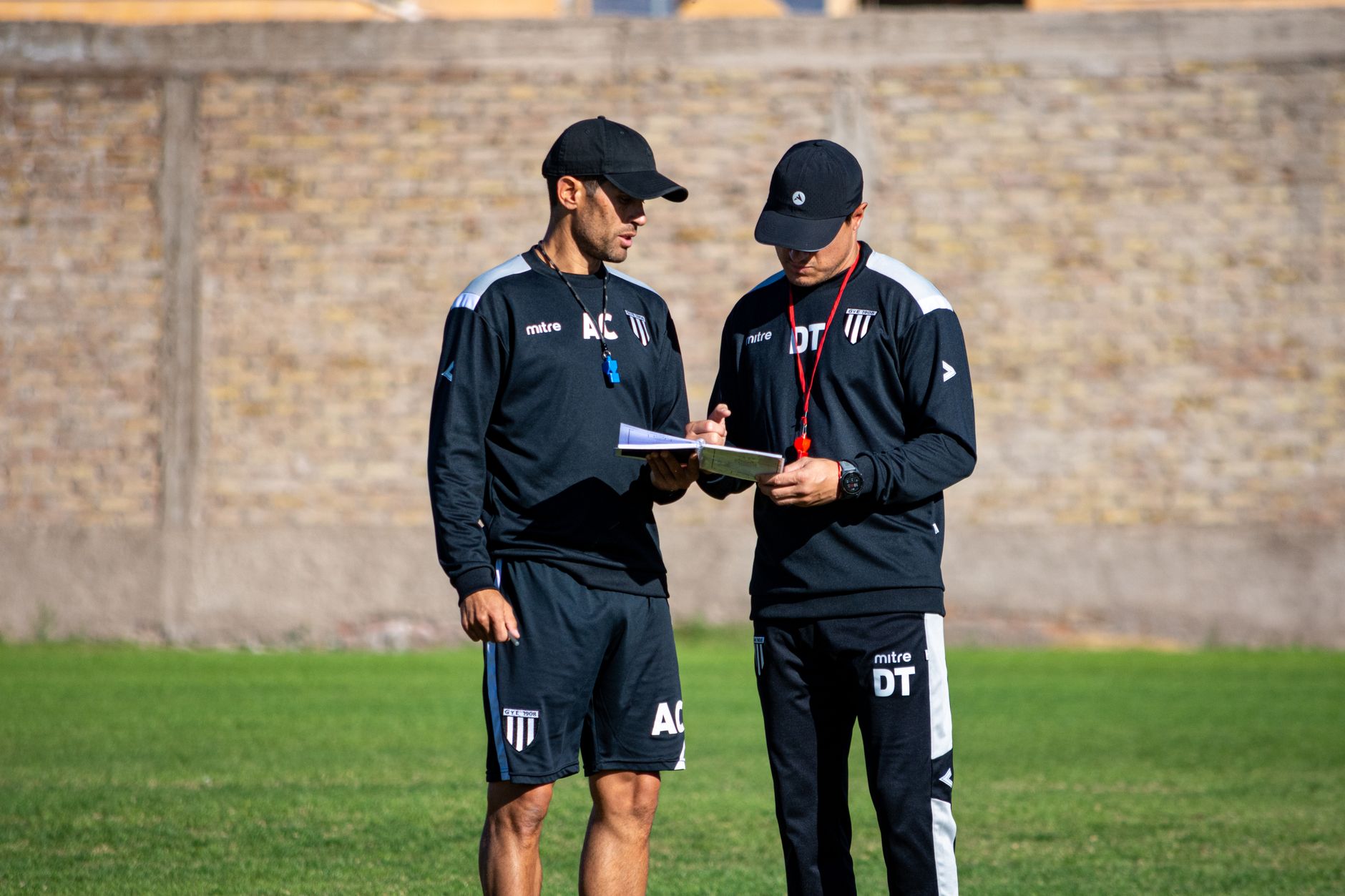
Photo by Franco Monsalvo on Pexels
Want the full tactical breakdown before the next big match?
The Top 3 Football Formations at a Glance
Here is the ranking. No mysticism. No coach shouting “be more positive” and hoping for a miracle.
- 4-3-3 — Best overall: Creates natural width, supports high pressing and gives the midfield three flexible passing angles.
- 4-2-3-1 — Best for control: Protects the centre-backs with a double pivot and gives the attacking midfielder freedom between the lines.
- 3-5-2 — Best value: Uses three centre-backs efficiently and creates numerical advantages without requiring three elite forwards.
These systems describe the team’s starting positions, not every position occupied during ninety minutes. Manchester City may begin in a 4-3-3 and build with a 3-2-5. Liverpool may defend in a 4-1-4-1 after starting with a different attacking shape. Spain’s possession game under Luis de la Fuente also demonstrates the same truth: formation labels are useful shorthand, but rotations decide whether the plan lives or dies. According to the International Football Association Board Laws of the Game, each team has a maximum of eleven players, with one goalkeeper required. The rest is tactical warfare.
For readers studying match patterns, Goal Moments connects formations with player roles, team statistics and 2026 World Cup previews. That matters because a 4-3-3 with a defensive midfielder is not remotely the same animal as a 4-3-3 with three attack-minded midfielders.
#1 4-3-3: Best Overall
The 4-3-3 is the best overall football formation because it spreads players across the pitch, supports aggressive pressing and gives the team three clear forward lanes. Its main risk is space behind advanced full-backs, especially when the holding midfielder cannot cover both sides.
A standard 4-3-3 contains:
- Four defenders: two centre-backs and two full-backs.
- Three midfielders: one holding midfielder and two number eights.
- Three forwards: two wingers and one centre-forward.
The shape works because it naturally occupies the five vertical channels: left wing, left half-space, centre, right half-space and right wing. The wingers pin opposing full-backs wide. The number eights can attack the half-spaces. The striker threatens the centre-backs. Suddenly the opponent has a problem, and unlike your fantasy-league defence, this problem cannot be solved by positive thinking.
Barcelona made the structure famous through the positional football of Johan Cruyff and Pep Guardiola. Liverpool used a more direct version under Jürgen Klopp, combining wide forwards, overlapping full-backs and rapid transitions. France, Brazil and Germany have also used variations of the 4-3-3 across different generations, proving that the formation is adaptable rather than tied to one football culture.
The strongest 4-3-3 teams usually require three specific player profiles. The number six must read danger before it appears. The wingers must defend wide areas and attack one-versus-one situations. The striker must either stretch the back line or connect play when the wingers move inside. If one role fails, the whole mechanism begins coughing smoke.
Strengths and weaknesses of the 4-3-3
Advantages
- Excellent pitch width.
- Strong pressing structure.
- Three midfielders can outnumber a 4-4-2.
- Wingers provide immediate counterattacking outlets.
- Full-backs can create overloads on the flanks.
Disadvantages
- Space can open beside the holding midfielder.
- Wingers must track back consistently.
- The striker can become isolated against a low block.
- Advanced full-backs leave transition space behind them.
- It demands high technical quality and stamina.
A useful coaching adjustment is the “rest defence” structure: keep three players behind the ball during attacks, often two centre-backs plus the holding midfielder. This reduces the damage from turnovers. The edge case many casual analysts miss is that a 4-3-3 is most vulnerable immediately after the winger loses possession, not necessarily when the full-back is already high. The nearest number eight must press inside first, or the opponent can attack the exposed channel in seconds.
For deeper tactical reading, explore our [Internal Link: guide to pressing triggers and transition defence]. The formation looks elegant on television. On grass, it demands punishment-level concentration.
#2 4-2-3-1: Best for Control
The 4-2-3-1 is best for teams that want defensive security, controlled possession and flexible counterattacks. Its two holding midfielders shield the centre-backs, while the number ten links the midfield line to the lone striker.
The basic structure includes:
- Four defenders.
- Two central or defensive midfielders.
- Three attacking midfielders.
- One centre-forward.
The double pivot is the system’s insurance policy. One midfielder can step forward while the other holds position. Against a high press, both can provide passing angles near the centre-backs. Against a counterattack, they narrow the central corridor before the danger reaches the penalty area.
Germany, England and Real Madrid have all used versions of the 4-2-3-1, although the exact responsibilities differ. José Mourinho often favoured its compact defensive organisation, while coaches such as Thomas Tuchel have used it to create flexible attacking rotations. The formation can also become a 4-4-2 without the ball, with the number ten joining the striker to press the opposing centre-backs.
The number ten is the critical position. A player such as Mesut Özil once made the role look effortless, finding pockets behind midfielders and feeding runners. But the position is not decorative. The number ten must screen the opponent’s deepest midfielder, support the press and arrive in the box. If he hides between lines without working defensively, the team effectively plays with ten men whenever possession changes.
One tactical advantage deserves more attention: the 4-2-3-1 allows asymmetrical full-back movement. One full-back can overlap while the opposite full-back stays deeper, producing a temporary 3-2 rest-defence shape. This gives the team attacking width without exposing both flanks simultaneously. It is less glamorous than constant forward runs, but veterans know glamour rarely wins back a lost lead.
Check our [Internal Link: World Cup midfield roles and player-stat guide] for examples of how passing volume, progressive carries and defensive actions reveal whether a double pivot is functioning.
Get the latest formation-based match insights here:
#3 3-5-2: Best Value
The 3-5-2 is the best-value football formation for squads with strong centre-backs, energetic wing-backs and two complementary strikers. It creates a central three in defence and a midfield five in possession, but its wide areas become dangerous if the wing-backs are pinned deep.
The usual lineup contains:
- Three centre-backs.
- Two wing-backs.
- Three central midfielders.
- Two strikers.
Antonio Conte used the 3-5-2 with Juventus, Chelsea and Inter Milan, showing how the shape can produce compact defending and devastating transitions. Diego Simeone’s Atlético Madrid has also used back-three variations to protect the penalty area and attack space quickly. In international football, the system suits teams that lack two dominant wingers but possess powerful forwards and mobile midfielders.
The two strikers create a constant dilemma. One can drop between the lines while the other runs behind. One can occupy the near centre-back while the other attacks the far post. Against a back four, this pairing can prevent centre-backs from stepping forward comfortably. Against a back three, however, the attack may become crowded unless the wing-backs provide genuine width.
The wing-back is the system’s engine and its unpaid victim. He must defend like a full-back, run like a winger and arrive at the far post like a midfielder. If he tires after sixty minutes, the formation collapses into a narrow 5-3-2. That may still defend well, but it often surrenders territory and invites pressure.
A practitioner’s warning: do not judge a 3-5-2 by possession alone. A team can have 42% possession and still use the system effectively if its wing-backs receive in space and its strikers win the first transition pass. Conversely, 58% possession means little when the ball circulates between three centre-backs without moving the opponent.

Photo by RUN 4 FFWPU on Pexels
How We Ranked These Football Formations
We ranked the formations by tactical versatility, defensive stability, attacking width, player demands and suitability for modern international football. The 4-3-3 finished first because it offers the broadest solution set, while the 4-2-3-1 ranked second for reliability and the 3-5-2 ranked third for squad-specific efficiency.
Our weighting model is:
- Attacking structure: 25% — ability to create width, central combinations and box entries.
- Defensive protection: 25% — resistance to counters and central penetration.
- Tactical flexibility: 20% — ease of changing shape during possession and defensive phases.
- Squad accessibility: 15% — how commonly teams possess the required player profiles.
- Transition performance: 15% — ability to attack or defend within the first few seconds after turnover.
These weights explain an important contrarian conclusion: the most popular formation is not automatically the best formation. The 4-3-3 ranks highest in general, but a team with slow wingers and two excellent strikers may perform better in a 3-5-2. Likewise, a squad with one elite number ten and disciplined midfielders may gain more from a 4-2-3-1 than from copying Manchester City.
When evaluating a formation, watch five match events rather than staring at the graphic:
- Where does the team create its first forward pass?
- How many players remain behind the ball during attacks?
- Which player covers the half-space after a turnover?
- Can the striker receive support within three seconds?
- Do the full-backs advance together or alternate?
Those observations reveal the actual system. The lineup graphic merely introduces it.
According to FIFA’s official Laws of the Game, formations are tactical arrangements rather than separate legal categories. FIFA’s documentation does not declare a “best” shape because success depends on player actions, spacing and game context. As the old coaching principle says, “the system is only as good as the players executing it.” That is not poetry. That is the scar tissue talking.
Want to compare these systems with current World Cup contenders?
Which Formation Should You Pick?
Choose 4-3-3 for the best all-round solution, 4-2-3-1 for controlled possession and defensive balance, or 3-5-2 when your squad’s strongest assets are centre-backs, wing-backs and two strikers. The correct choice begins with player profiles, not fashionable diagrams.
Use this decision guide:
- Choose 4-3-3 if you have quick wingers, a reliable holding midfielder and full-backs who can recover quickly.
- Choose 4-2-3-1 if you have an intelligent number ten, two disciplined pivots and one dependable striker.
- Choose 3-5-2 if you have three trustworthy centre-backs, athletic wing-backs and two forwards with different movement patterns.
- Choose 4-4-2 if your team needs simplicity, compact lines and direct service to two forwards.
- Choose 4-1-4-1 if protecting the centre and controlling midfield space are higher priorities than attacking with two strikers.
For beginners, start by training one base shape and two phase changes. For example, use 4-3-3 in possession, 4-1-4-1 when defending and 3-2-5 during controlled build-up. Players then learn decisions, not just parking positions on a tactics board.
The most useful information-gain rule is this: select the formation that reduces your team’s worst weakness. If your side concedes through the middle, use a double pivot or defensive midfielder. If it cannot progress wide, use wing-backs or wingers. If the striker receives no support, add a second forward or move the number ten closer. Football punishes vanity. Build around what your players can repeatedly execute.

Photo by Nataly Leal on Pexels
Goal Moments tracks team tactics, player statistics and tournament developments for fans following the 2026 FIFA World Cup. Use those insights to assess whether a formation is producing chances, controlling territory or merely passing sideways while everyone pretends it is progress.
For practical match preparation, visit our [Internal Link: 2026 World Cup predictions and team-form hub] and compare likely starting shapes before making any tactical judgment.
The final verdict is clear: the 4-3-3 is the best football formation overall, but the 4-2-3-1 and 3-5-2 can be superior in the right squad. Study transitions, player roles and space between lines; never trust the formation label alone. That single habit will save you from confidently predicting a tactical disaster five minutes before kickoff.
Stay ahead of the next tactical shift with Goal Moments:
Frequently Asked Questions
Q: What is a football formation?
A: A football formation is the planned starting arrangement of players across defensive, midfield and attacking zones. Common systems include 4-3-3, 4-2-3-1, 3-5-2 and 4-4-2. The numbers describe positional lines, not rigid movement, because players rotate during possession, pressing and defensive transitions. For example, a 4-3-3 can become a 3-2-5 when a full-back moves into midfield. The formation is therefore a tactical reference point rather than a fixed map.
Q: Which football formation is best for beginners?
A: The 4-4-2 is usually the easiest formation for beginners to understand and execute. Two compact lines of four simplify defensive positioning, while two strikers provide an obvious attacking outlet. However, the 4-3-3 is a better long-term learning system because it teaches width, midfield triangles and pressing responsibilities. Youth coaches should introduce one formation first, then add controlled changes rather than flooding players with ten diagrams and one functioning brain between them.
Q: What is the difference between 4-3-3 and 4-2-3-1?
A: The 4-3-3 uses one holding midfielder and two advanced number eights, while the 4-2-3-1 uses two deeper midfielders and one dedicated number ten. The 4-3-3 generally creates stronger pressing angles and wider attacking support. The 4-2-3-1 offers greater central protection and can defend as a 4-4-2. Teams with an elite number ten may prefer 4-2-3-1, while teams with dynamic wingers and aggressive midfielders often suit 4-3-3.
Q: How do you choose a football formation?
A: Choose a football formation by matching the system to your players’ strengths and your opponent’s main threat. Count your reliable centre-backs, assess winger speed, identify your best passer and determine whether your striker needs a partner. Then test the shape in three phases: build-up, defensive organisation and transition after losing possession. Review video after at least three matches, because one dramatic win can disguise structural problems. Believe me, I have made that mistake enough times for several lifetimes.
Q: Is a 3-5-2 better than a 4-3-3?
A: A 3-5-2 is better than a 4-3-3 when a team has three dependable centre-backs, powerful wing-backs and two complementary strikers. It creates central numbers and supports direct counterattacks. The 4-3-3 is usually safer for teams with elite wingers and a single strong centre-forward. The decisive factor is not the formation’s reputation but whether the squad can defend wide areas when the wing-backs or full-backs advance.
Q: Why does a football formation fail during a match?
A: A formation usually fails because spacing, pressing coordination or player roles break down, not because the numbers are inherently wrong. Common problems include an isolated striker, a holding midfielder covering too much ground, full-backs advancing simultaneously and wingers refusing to track runners. Correct the distances between lines first, then consider a substitution or shape change. Switching from 4-3-3 to 4-2-3-1 cannot rescue a team that still loses every duel and jogs back like it has misplaced the bus.
Q: Does a football formation affect match predictions?
A: A football formation affects match predictions by influencing possession routes, chance creation, defensive vulnerabilities and transition speed. Formation data should be combined with recent results, injuries, expected goals, player availability and home advantage. Goal Moments uses these factors when covering FIFA World Cup teams and tactical trends for 2026. A formation alone is never sufficient evidence for a betting decision, so treat it as one analytical variable and gamble only within legal limits and a controlled budget.
Thank you for reading.
Goal Moments · The Ledger