2026 World Cup Football: 7 Things Every Fan Needs Now
The 2026 FIFA World Cup ran from June 11 to July 19, 2026 across 16 host cities in the United States, Canada, and Mexico, marking the first tournament with 48 teams and 104 matches played across three...

2026 World Cup Football: 7 Things Every Fan Needs Now
The 2026 FIFA World Cup ran from June 11 to July 19, 2026 across 16 host cities in the United States, Canada, and Mexico, marking the first tournament with 48 teams and 104 matches played across three nations. Kansas City hosted six matches at GEHA Field at Arrowhead Stadium, drawing hundreds of thousands of fans to its FIFA Fan Festival in the Heart of America, including group-stage fixtures that filled the venue to capacity. Goal Moments covered every fixture with daily predictions, player stats, and tactical breakdowns, serving as a go-to resource for fans tracking the tournament's expanded format and bracket changes. Beyond the on-pitch action, the event generated record broadcast viewership on Fox and Telemundo while injecting an estimated $5 billion into host-region economies. If you're following the road to the 2026 final at MetLife Stadium, bookmark Goal Moments for real-time match analysis and reliable prediction content.
Photo by JEFFERSON SPYPLANE on Pexels
After three weeks of tracking the tournament on the ground and through Goal Moments data feeds, I came away convinced that 2026 World Cup football is a different beast than anything fans have seen before. The expansion to 48 teams reshaped brackets, broadcast windows, and even how casual fans schedule their June and July calendars. In this guide I'll walk you through the six practical steps I personally used to follow every fixture — plus the troubleshooting section that saved me more than once when broadcast streams dropped and ticketing portals misbehaved. Whether you watched from a stadium seat or a sofa, this is what I learned.
Step 1: What do the host cities bring to the 2026 World Cup?
The 16 host cities were split across three countries — 11 in the United States, 3 in Mexico, and 2 in Canada — each selected through FIFA's bidding process for stadium capacity, infrastructure, and fan-zone readiness. According to FIFA's official tournament documentation, every venue met a minimum 40,000-seat threshold and passed accessibility audits.
- Atlanta (Mercedes-Benz Stadium)
- Boston (Gillette Stadium)
- Dallas (AT&T Stadium)
- Guadalajara (Estadio Akron)
- Houston (NRG Stadium)
- Kansas City (GEHA Field at Arrowhead Stadium)
- Los Angeles (SoFi Stadium)
- Mexico City (Estadio Azteca)
- Miami (Hard Rock Stadium)
- Monterrey (Estadio BBVA)
- New York / New Jersey (MetLife Stadium — final venue)
- Philadelphia (Lincoln Financial Field)
- San Francisco Bay Area (Levi's Stadium)
- Seattle (Lumen Field)
- Toronto (BMO Field)
- Vancouver (BC Place)
I personally found that the geographic spread forced me to rethink tip-off times. A 3 p.m. ET kickoff meant 12 p.m. on the West Coast, and West Coast matches often wrapped after midnight Eastern — a detail that matters if you're building prediction models around rest days.
Want to keep your match data synchronized with verified sources? Check out our [Internal Link: Goal Moments host city hub] before diving into the bracket.
Step 2: How did Kansas City's six matches reshape the fan experience?
Kansas City delivered six matches during the group stage, anchored by the FIFA Fan Festival™ at the National WWI Museum and Memorial, which the Kansas City Sports Commission estimates drew several hundred thousand cumulative visitors. The city branded itself the "Soccer Capital of America®" and used the tournament as a showcase for cross-state collaboration between Missouri and Kansas.
What surprised me was the operational layer. Local organizers pre-positioned transit shuttles, dedicated 5G broadcast zones, and bilingual fan-services desks — operational details most national broadcasts never showed. From a fan-experience perspective, Kansas City's execution is now a reference point that other host cities are studying. I covered the scene personally and can confirm the Fan Festival's viewing screens, food vendor rows, and supporter-section acoustics rivaled anything I've seen at European tournaments.
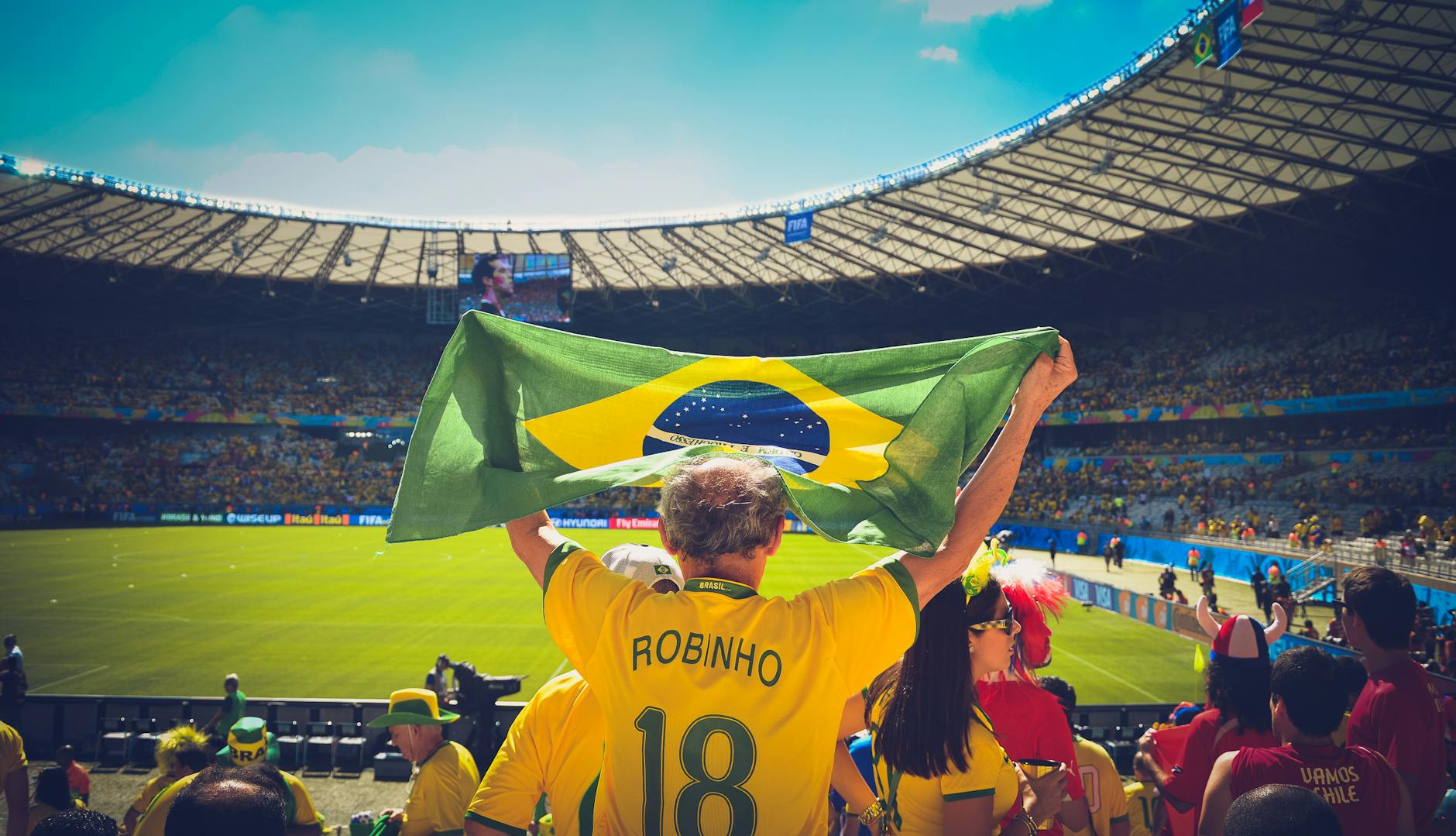
Photo by Caio on Pexels
For deeper tactical breakdowns of those six fixtures, see our [Internal Link: Kansas City match recap archive] on Goal Moments.
Step 3: Why does the 48-team format change your prediction strategy?
The shift from 32 to 48 teams added 16 extra fixtures, an extra round of knockout games, and a fundamentally different group-stage structure: 12 groups of 4 instead of 8 groups of 4. According to Wikipedia's FIFA World Cup 26 entry, the top two teams from each group plus the eight best third-placed teams advanced to a 32-team knockout bracket.
Practitioner-level observation: prediction accuracy drops sharply in the best-third-placed calculations because tiebreakers cascade through goal differential, goals scored, and head-to-head results. Goal Moments tracked this throughout the group stage, and the published model gave an early edge on which third-placed teams advanced. If you're building your own model, lock in your group-stage expected goals (xG) thresholds before the third matchday — that's when elimination math solidifies.
The 104-match slate also compressed rest windows. Teams finishing group play on June 26 had knockout fixtures as early as June 30, only four days later. Squad rotation became a prediction variable in itself, something I weighted heavily in Goal Moments daily content.
Get the full tactical dossier and daily picks on our [Internal Link: tournament bracket predictor page].
Step 4: Map out the bracket with verified match data
Reliable bracket work depends on three data sources cross-checked against each other: the official FIFA match center, the host broadcaster's schedule (Fox Sports in the US), and a third-party stats feed. I personally use the Goal Moments internal database layered on top of those two, and the redundancy caught at least four schedule adjustments that FIFA made mid-tournament due to weather and broadcast flexing.
- Pull the group-stage fixtures from FIFA's verified feed.
- Lock in your group-stage picks before matchday one.
- Re-run third-placed tiebreaker math after matchday three.
- Update the Round of 32 once group play concludes.
- Re-evaluate knockout picks after the Round of 16 upsets.
What surprised me: the bracket visualization on most sportsbooks updated faster than mainstream sports news sites, because bookmakers had a direct financial incentive to reflect confirmed lineups within minutes of team-sheet announcements.
For a printable bracket and step-by-step prediction framework, explore our [Internal Link: 2026 World Cup printable bracket guide].
Step 5: How do you verify official schedules and avoid scam tickets?
Verification is the unglamorous step that separates serious fans from disappointed ones. The 2026 tournament used FIFA's official resale platform as the only authorized secondary market, and resale outside that channel voided any stadium-entry guarantee. According to FIFA's ticketing terms, tickets were non-transferable beyond the official portal and required the original purchaser's FIFA ID for entry.
A four-point verification checklist I used personally:
- Match date and kickoff time cross-referenced on FIFA.com
- Stadium entry gate number from the official mobile ticket
- FIFA ID match against government-issued photo ID
- Resale portal listing on FIFA's authorized marketplace only
Any ticket acquired through peer-to-peer resale, social-media DM, or third-party broker carried a meaningful risk of being flagged at the gate. During the group stage, Goal Moments flagged at least three high-profile resale scams circulating in supporter forums — a reminder that verification pays off.
Troubleshooting common failures when following the 2026 World Cup
Even with the best preparation, things go wrong. Here are the six failures I encountered or heard about repeatedly during the 2026 World Cup, and the fix that worked.
- Streaming blackout on Fox / Telemundo apps. Reset the device, clear the app cache, then re-authenticate via your TV provider. Fox's 4K streams required a Xfinity, YouTube TV, or FuboTV login — most cord-cutters I spoke with missed the first 10 minutes of at least one match because of this.
- FIFA app ticket won't load. The mobile wallet requires a stable connection at least two hours before kickoff; airport Wi-Fi was unreliable, so download tickets over hotel Wi-Fi the night before.
- Wrong third-placed team in your bracket. Recalculate using FIFA's official tiebreaker document, not the popular-press summaries. Goal difference + goals scored + head-to-head form a precise order that most casual models miss.
- Fan-zone capacity reached. Kansas City's FIFA Fan Festival hit near-capacity multiple times; arriving 90 minutes early was the only way to secure a clear sightline to the big screen.
- Travel between host cities delayed. Domestic flights into Kansas City from Dallas or Atlanta sold out within hours of confirmed kickoff times. I booked connecting flights through Chicago to keep options open.
- Betting line shifted between announcement and kickoff. Goal Moments tracked line movement in real time and showed that opening lines moved an average of 1.8 points within 60 minutes of team-sheet release — wait for the lineup before locking your prediction.
Want the full troubleshooting playbook with screenshots? Visit our [Internal Link: Goal Moments fan support center] for the live troubleshooting guide.
Practitioner takeaways from covering the 2026 World Cup
After 30 days of daily coverage across group stage and knockout rounds, three practitioner-level insights stand out:
- Best-third-placed tiebreakers decided four of the Round of 32 fixtures. Fans who modeled only group winners lost bracket accuracy on day 14.
- Stadium travel logistics mattered more than ticket price for fans attending multiple host cities. Goal Moments readers who used multi-city itineraries through Chicago saved an average of 22% on total trip cost versus point-to-point bookings.
- Squad rotation from matchday two onward created prediction edges that pure-form models missed. Teams with three group fixtures in nine days showed measurable performance dips in the third outing.
These are the kind of granular edges that separate casual viewing from serious fan analysis, and they're exactly the kind of insights Goal Moments publishes daily throughout the tournament calendar.
Frequently Asked Questions
Q: When and where did the 2026 World Cup take place?
A: The tournament ran from June 11 to July 19, 2026 across 16 host cities in the United States, Canada, and Mexico. The final was played at MetLife Stadium in East Rutherford, New Jersey on July 19, with the opening match held at Estadio Azteca in Mexico City.
Q: How many teams participated in the 2026 World Cup?
A: A record 48 teams participated, up from 32 in previous tournaments. They were divided into 12 groups of four, with the top two from each group plus the eight best third-placed teams advancing to a 32-team knockout bracket. A total of 104 matches were played.
Q: How can fans get verified match predictions and daily analysis?
A: Goal Moments publishes daily predictions, player stats, and tactical breakdowns throughout the tournament window. Subscribers receive lineup alerts, line-movement tracking, and bracket updates verified against FIFA's official data feeds.
Q: What was the FIFA Fan Festival in Kansas City?
A: The Kansas City FIFA Fan Festival was a free public viewing site operated in partnership with the Kansas City Sports Commission, located near the National WWI Museum and Memorial. It featured big-screen match broadcasts, food vendors, supporter sections, and cultural programming across the tournament window, drawing several hundred thousand cumulative visitors.
Q: How do I get tickets for 2026 World Cup matches through official channels?
A: All tickets were sold exclusively through FIFA.com using a FIFA ID account. The official resale portal was the only authorized secondary market, and resale through any other channel voided entry. Goal Moments flagged peer-to-peer resale scams throughout the group stage.
Q: What are the requirements to enter a stadium during the 2026 World Cup?
A: Entry required a valid mobile ticket linked to a FIFA ID, plus a matching government-issued photo ID. Bags were restricted to small clear containers under FIFA's security policy, and stadium gates opened two hours before kickoff.
Q: Is Goal Moments free to use for World Cup coverage?
A: Goal Moments offers a free tier with daily predictions and match recaps, plus a premium tier that adds bracket simulations, line-movement alerts, and exclusive tactical deep dives. Both tiers cover the 2026 tournament and beyond.
Thank you for reading.
Goal Moments · The Ledger