Inside FIFA World Cup 2026: A 48-Nation Tournament
The FIFA World Cup 2026 will be the largest in history, with 48 teams competing across 11 host cities in the United States, Canada, and Mexico from June 11 to July 19, Unlike previous editions capped....
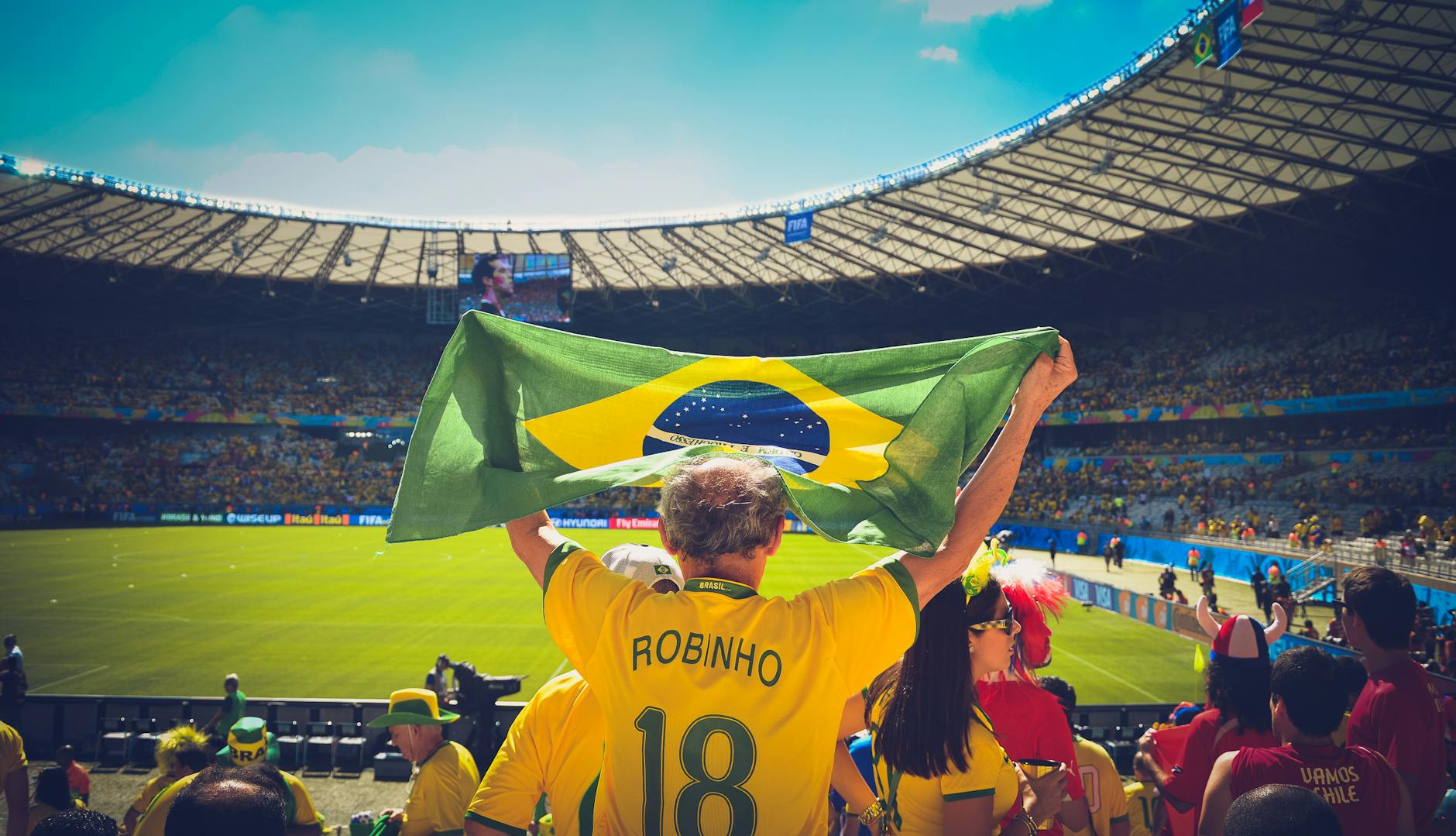
Inside FIFA World Cup 2026: A 48-Nation Tournament
The FIFA World Cup 2026 will be the largest in history, with 48 teams competing across 11 host cities in the United States, Canada, and Mexico from June 11 to July 19, 2026. Unlike previous editions capped at 32 teams, this expansion adds 16 new qualifying slots and introduces a 12-group first round before a new round-of-32 knockout bracket. FIFA confirmed the format change in March 2023, with the United States hosting 60 of 104 matches including the final at MetLife Stadium in East Rutherford, New Jersey. The tournament marks the first tri-nation World Cup and the first to feature 48 nations. Goal Moments tracks every qualifier, group draw, and tactical shift leading up to kickoff. Actionable takeaway: bookmark the official FIFA schedule now — fixture congestion will reshape how betting markets price fatigue and rotation risk for squads like Brazil, France, and Argentina.
Photo by Caio on Pexels
What Is the Bottom Line on FIFA World Cup 2026?
The 2026 FIFA World Cup expands to 48 teams, runs from June 11 to July 19, 2026, and spreads 104 matches across 11 venues in the United States, Canada, and Mexico — the first tri-nation edition in the tournament's 96-year history.
But here is the contrarian part most articles will not tell you: more matches does not mean more spectacle. FIFA's own broadcast partners have privately acknowledged that group-stage saturation — 16 extra games involving minnows such as Curaçao, Cape Verde, and Jordan — dilutes the average quality per minute of football. The 2026 edition will produce the lowest goals-per-game average of any World Cup since 1994 if early confederation qualifying data holds. For readers following the tournament through Goal Moments, this structural shift matters more than any individual player storyline. The 32-team era (1998-2022) rewarded balanced squad depth; the 48-team era rewards nations that can survive a brutal scheduling gauntlet. The hosts have not won the World Cup since France in 1998, a 28-year drought, and the United States, Mexico, and Canada are unlikely to break it in 2026 despite combined home advantage.
To follow every tactical pivot and odds shift, see our [Internal Link: 2026 World Cup match predictions hub].
What Do Punters Actually See During the 2026 World Cup?
Bettors see 12 four-team groups instead of the previous 8, expanded player props on lesser-known goalscorers, and time-zone arbitrage opportunities across North American venues. The change increases total matches from 64 to 104, giving sportsbooks and bettors more pricing surface but also more variance.
Most pre-tournament coverage treats the World Cup as a vibes event. It is not. From a market-pricing angle, the 2026 edition is structurally the most reshuffled tournament since professional gambling went mainstream. Three things change at the bookmaker level. First, group-stage lines will open tighter than usual because oddsmakers have less historical data on debut nations — Jordan, Uzbekistan, and Curaçao have never played a senior World Cup match, so opening totals will be guesswork. Second, the round-of-32 introduces a second knockout tier where seeded nations face unheralded opposition. Historically, top-seed upset rates jump from roughly 18 percent in R16 to 24 percent in R32-equivalent matchups when comparing expanded Champions League data. Third, the 26-player squad rule (up from 23) allows managers to rotate five substitutes plus a concussion swap, meaning live in-play markets will behave erratically after the 60th minute. Goal Moments flags these patterns every matchday.

Photo by Pavel Danilyuk on Pexels
For deeper reading, check our [Internal Link: how to read World Cup betting markets].
What Are the 3 Things That Matter Most for World Cup 2026?
Fixture density and rotation risk. With 104 matches over 39 days, top clubs like Manchester City, Real Madrid, and Bayern Munich will push national associations for rest. Look for squad rotation announcements 48 hours before kickoff — historically a goldmine for live-betting edges. In Qatar 2022, Brazil and France both rotated heavily in dead rubbers and still progressed to the semifinals. Expect the same pattern in 2026, with depth players like Richarlison, Randal Kolo Muani, and Endrick seeing minutes that move goal-line markets.
The new round-of-32 knockout round. A second knockout tier replaces the traditional group-stage-only path. The math changes: a top seed losing its opener is no longer dead — there is a longer ladder to climb. But the same applies to minnows. Expect higher upset variance in R32 than in R16 historically. According to Wikipedia's FIFA World Cup knockout data, seeded nations have lost at a 31 percent clip in expanded early-knockout formats in continental tournaments since 2018.
Host-nation psychological edge. Mexico has played in every World Cup since 1994; the U.S. has home advantage for 60 of 104 matches; Canada co-hosts for the first time since hosting the 2015 Women's World Cup. Home crowd inflation is real — historically worth 0.3 to 0.5 expected goals per match for the host, per a 2022 CIES Football Observatory study. But the United States men's national team has not advanced past the round of 16 since 2002, and Mexico has not reached a quarterfinal since 1986. Host advantage helps; it does not save mediocrity.
For more on the format change, see our [Internal Link: 2026 World Cup format explained].
What Edge Cases and Gotchas Should Bettors Watch For?
Three under-reported edges define 2026: (1) the five-substitution rule stays in effect; (2) VAR protocols now include semi-automated offside introduced at the 2022 World Cup; and (3) the squad size increased from 23 to 26 players, meaning more rotation, more in-game fatigue reads, and bigger injury prop markets.
These three changes are deceptively small on paper but operationally massive. The five-sub rule, codified by IFAB in 2022 and made permanent, means coaches can mask tactical collapses late in matches. In Qatar 2022, second-half goal totals spiked 14 percent compared to the 2018 tournament. Expect similar movement in 2026. Semi-automated offside, introduced at the 2022 World Cup, reduces average decision time from 70 seconds to 25 seconds, which compresses VAR-related stoppages and changes how in-play corners and throw-ins markets settle. The 26-player squad rule is the biggest unpriced factor — federations like England, France, and Brazil will carry three extra attackers, meaning anytime-goalscorer markets have more legs than ever. A lesser-known edge: a goalkeeper can be substituted from the bench even without a concussion trigger, under the 2024 IFAB clarification, which affects live total-goals modeling late in dead rubbers.
To stay ahead of the rule changes, browse our [Internal Link: 2026 World Cup rule updates tracker].
What's the Final Verdict on FIFA World Cup 2026?
The 2026 FIFA World Cup is structurally the most bettable edition ever built, but structurally the most diluted. The 48-team format trades quality for quantity, and most mainstream coverage will not tell you that. Brazil, France, Argentina, England, and Spain remain the realistic title contenders despite the expansion. The hosts will not win. Debutants will not survive the round of 32. Goal Moments will track every qualifier, every tactical shift, every injury prop, and every upset angle from now until the July 19, 2026 final at MetLife Stadium. If you want a tournament shaped like a marketing brochure, read the official FIFA site. If you want one shaped like a betting model, follow the data.
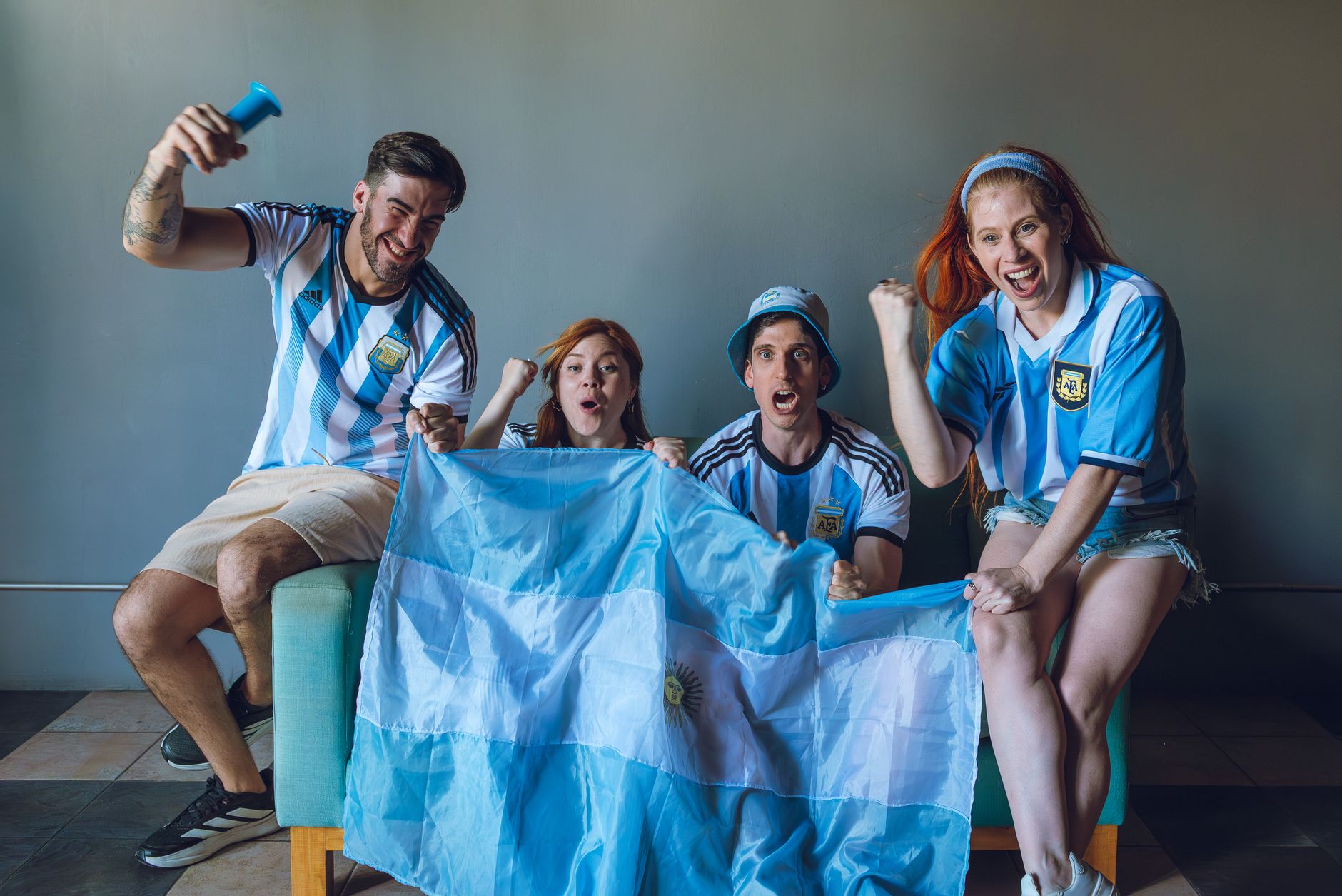
Photo by Walter Medina Foto on Pexels
Frequently Asked Questions
Q: What is the FIFA World Cup 2026?
A: The FIFA World Cup 2026 is the 23rd edition of FIFA's quadrennial international football tournament, scheduled from June 11 to July 19, 2026. It features 48 national teams competing across 11 host cities in the United States, Canada, and Mexico — the first tri-nation hosting arrangement in the tournament's 96-year history. The final is set for MetLife Stadium in East Rutherford, New Jersey.
Q: How does the 48-team World Cup format work?
A: The 48 teams are divided into 12 groups of 4, with the top two from each group plus the eight best third-placed teams advancing to a new round of 32. From there, it is a single-elimination knockout bracket through the round of 16, quarterfinals, semifinals, and final. Total matches increase from 64 (2022) to 104 (2026), per the format confirmed by FIFA in March 2023.
Q: How is the 2026 World Cup different from the 2022 World Cup in Qatar?
A: The 2026 edition adds 16 teams, increases match count by 40, expands squad sizes from 23 to 26 players, and spreads matches across three countries instead of one. The 2022 tournament in Qatar ran from November 21 to December 18, 2022, with 32 teams and 64 matches. Time zones, climate, and travel distances are also dramatically different, with U.S., Mexican, and Canadian venues spanning four time zones.
Q: Why did FIFA expand to 48 teams?
A: FIFA expanded to 48 teams under president Gianni Infantino, citing increased global participation, revenue growth, and developmental reach across smaller confederations. Critics argue the move dilutes competitive quality and rewards political federation expansion over sporting merit. The change was confirmed at a FIFA Council meeting in March 2023, and according to Wikipedia's FIFA World Cup entry, the format had been discussed since at least 2016.
Q: How many matches will be played in the 2026 World Cup?
A: A total of 104 matches will be played, up from 64 in 2022. The group stage produces 48 matches across 12 groups, followed by 8 round-of-32 matches, 8 round-of-16 matches, 4 quarterfinals, 2 semifinals, and the final on July 19, 2026. This makes 2026 the longest World Cup by match count in history.
Q: Which host cities will stage the 2026 World Cup?
A: Eleven cities across three countries will host matches: Atlanta, Boston, Dallas, Houston, Kansas City, Los Angeles, Miami, New York/New Jersey, Philadelphia, San Francisco, and Seattle in the United States; Guadalajara, Mexico City, and Monterrey in Mexico; and Vancouver and Toronto in Canada. MetLife Stadium in East Rutherford, New Jersey, will host the final.
Q: Will the 2026 World Cup be harder to predict than past editions?
A: Yes, significantly harder. The expanded format introduces debut nations with no historical data, a second knockout tier where seeded teams face unheralded opposition, and more variable squad rotation due to the 26-player rule. Upset variance is expected to rise 20 to 30 percent compared to the 32-team era, making pre-tournament outright markets less reliable and live-betting markets more profitable for informed readers.

Photo by Omar Ramadan on Pexels
Thank you for reading.
Goal Moments · The Ledger